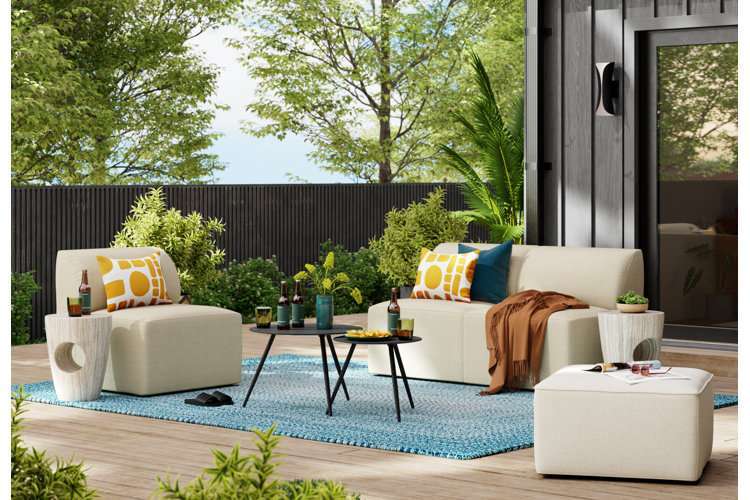
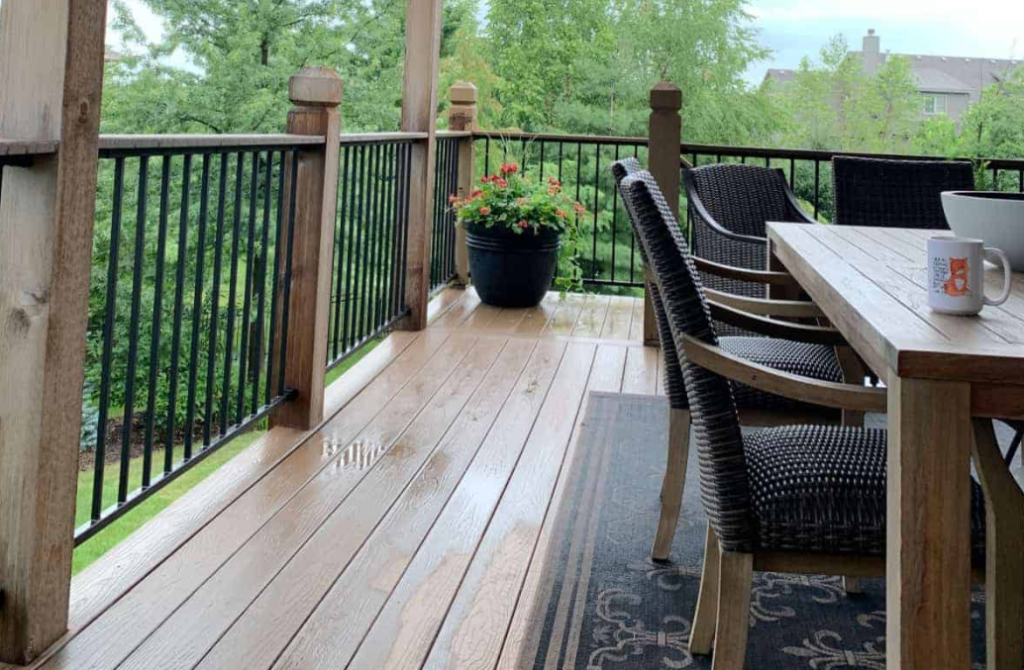
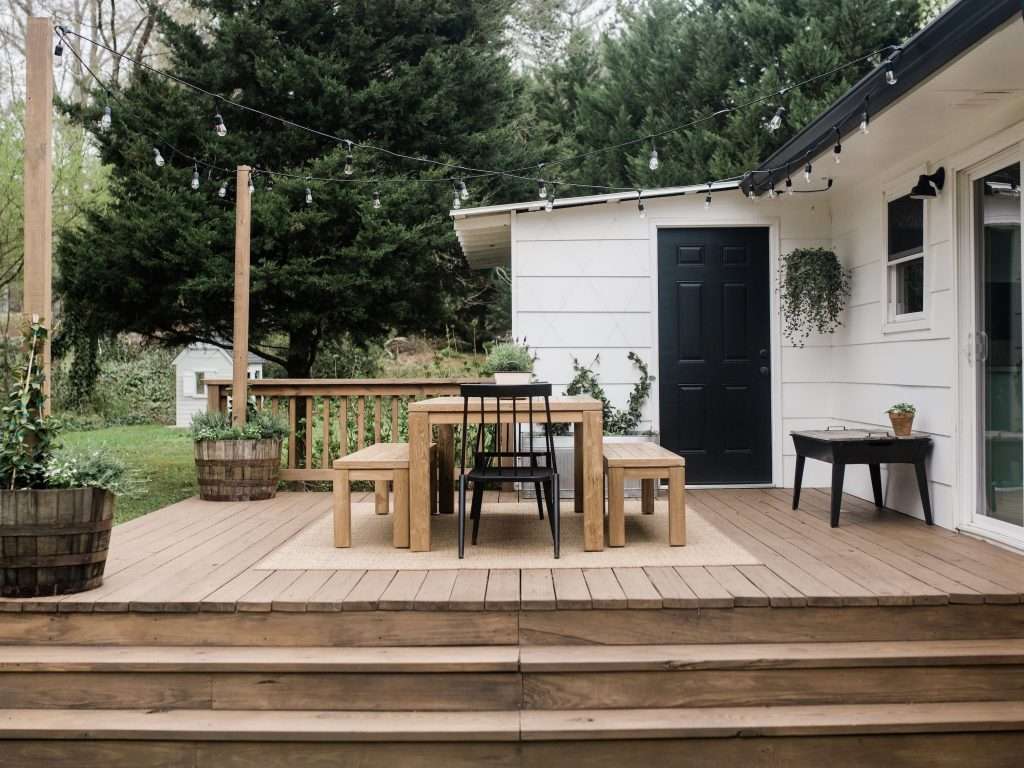
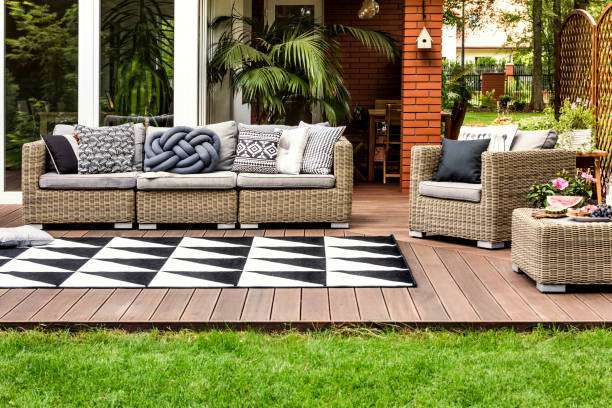
In the city, having a terrace or small balcony is indeed a luxury. Whether it’s sipping coffee in the morning or having a barbecue in the evening, this place is a symbol of “quality of life.” And in my opinion, the right rug is the soul of this place—it can instantly transform a bare concrete floor into an “outdoor living room.”
However (and here’s the key point), choosing a rug for the outdoors is a hundred times more difficult than choosing one for the living room.
rugs and indoor rugs on the market look so similar that it’s easy to fall into a trap. I’ve seen many friends (including myself back then) buy rugs for convenience or are misled by the attractive pictures online, only to find that the rugs they bought for hundreds or thousands of dollars turned into moldy “rags” after a month or two.
Today, as a pragmatist who “loves to tinker with the yard but is extremely averse to trouble,” I’m sharing five hard-earned lessons from my friends and me. Hopefully, you can avoid these pitfalls and save yourself from wasting money.
I. Basic Understanding: This is not as simple as just randomly switching between different methods.
Before discussing those “money-burning” mistakes, let’s reach a consensus: Outdoor Rugs and indoor carpets are fundamentally different species.
It’s like this: both sedans and SUVs can be driven, but if you insist on driving a sedan into a mud pit to go off-roading, the only result will be that it breaks down.
A. Material is key: Delicate “Princess” vs. Durable “Special Forces”
Indoor rugs (wool/cotton/linen): These are a haven for bare feet. They’re soft and comfortable to walk on. But they’re all “water-absorbing monsters” and extremely delicate. When I first started decorating my balcony, I took a two-year-old pure cotton rug outside to “air it in the sun.” After one rainy season, not only did its edges turn black, but it also emitted a musty smell. In the end, I had to painfully throw it away.
Outdoor Rugs (Polypropylene/PET): This is the kind of equipment you should have outdoors. They are mostly made of polypropylene or recycled plastic bottles (PET).
Waterproof like a raincoat: the fibers don’t absorb water at all, and they dry quickly when the rain stops and the wind blows.
Mold killer: Without moisture retention, mold cannot grow.
Wear-resistant and sun-resistant: It is designed so that you can wear shoes and let the sun shine on you.
B. Design Logic: Either be stunningly beautiful, or be “ugly” yet practical.
Indoor rugs prioritize artistry, featuring intricate patterns and vibrant colors. Outdoor rugs, however, are designed with “function first.” You might think outdoor colors are somewhat “dull” (like earth tones or gray), but this is actually a clever design choice—for stain resistance and sun protection.
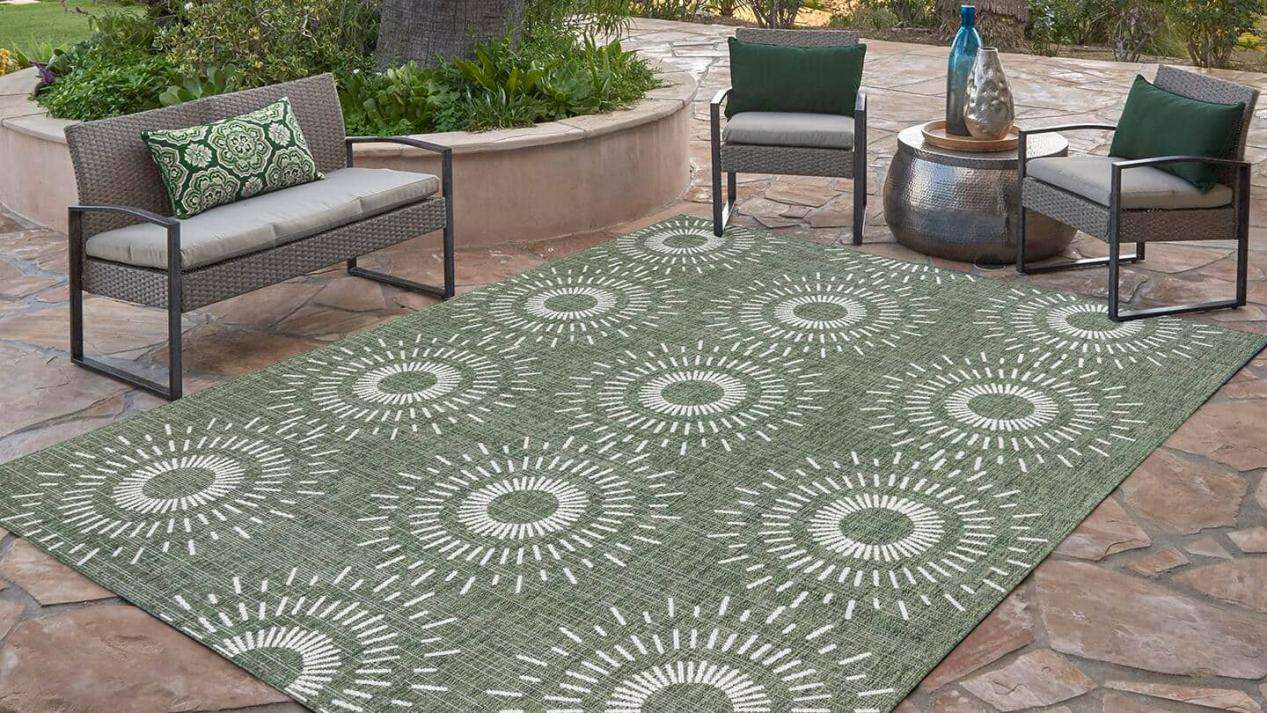
II. 5 Money-Burning Decisions: A Testimonial’s Tearful Account
Having understood the above, let’s get straight to the point. Let’s see how many of these five pitfalls you’ve fallen into.
Myth 1: Moving indoor carpets outdoors, thinking they’ll be usable as is.
This is the most common, but also the dumbest, way to save money. Many people think, “I don’t want this old indoor rug anymore, but it’s a shame to throw it away, so I’ll just leave it on the balcony for now.”
The painful price to pay: This “makeshift” approach usually doesn’t last more than two months. I’ve seen wool rugs become stiff, curled at the edges, and turn into breeding grounds for insects and mold after being exposed to a few rain showers outdoors. You end up not only dealing with this stinking mess, but also having to buy a completely new outdoor rug . That’s double the waste.
Lightning Protection Guide: Don’t be fooled by the feel. Outdoors, durability and softness are often inversely proportional. If you want a silky feel, keep it indoors. Outdoor rugs may feel slightly firmer, but they offer long-lasting peace of mind.
Myth 2: Focusing only on aesthetics while neglecting the carpet’s drainage system.
Some so-called outdoor rugs are woven very tightly for aesthetic purposes, or have an impermeable coating on the back. As a result, when it rains, the rug gets wet both on and off, becoming a veritable “water reservoir.”
The consequences are dire: lingering water not only creates an unpleasant odor but also accelerates the rotting of the carpet underlayment and can even damage your expensive, preservative-treated wooden decking. The stench during cleaning will be enough to make you question your existence.
Lightning Protection Guide: Before buying, do a “coffee test.” Pour a cup of water (or coffee) on it and see if it quickly soaks through and runs off, or if it stagnates on the surface. If the water droplets take a long time to disappear, return it immediately. High-quality outdoor rugs should act like a sieve, allowing water to pass through quickly.
Myth 3: Buying the wrong size is the root of being “stingy”.
Many people hesitate to spend money when buying a rug, thinking, “I’ll just buy a smaller size; it’s just an accessory anyway.” This is a huge mistake!
The painful lesson: a rug is the “foundation” of a space, not a “patch.” A rug that’s too small will make your outdoor furniture look like it’s floating on an island, and the entire terrace will appear fragmented, cheap, and like a makeshift showroom.
Avoidance Guide: Follow my “Carpet Rule”:
Rest area: Ensure that the front legs of sofas and chairs are at least 15-20 cm off the carpet.
Dining area: When a chair is pulled out and you sit down, the chair legs must still be within the carpet area.
Don’t skimp on the size ; a larger rug can instantly elevate the style of your terrace by two notches.
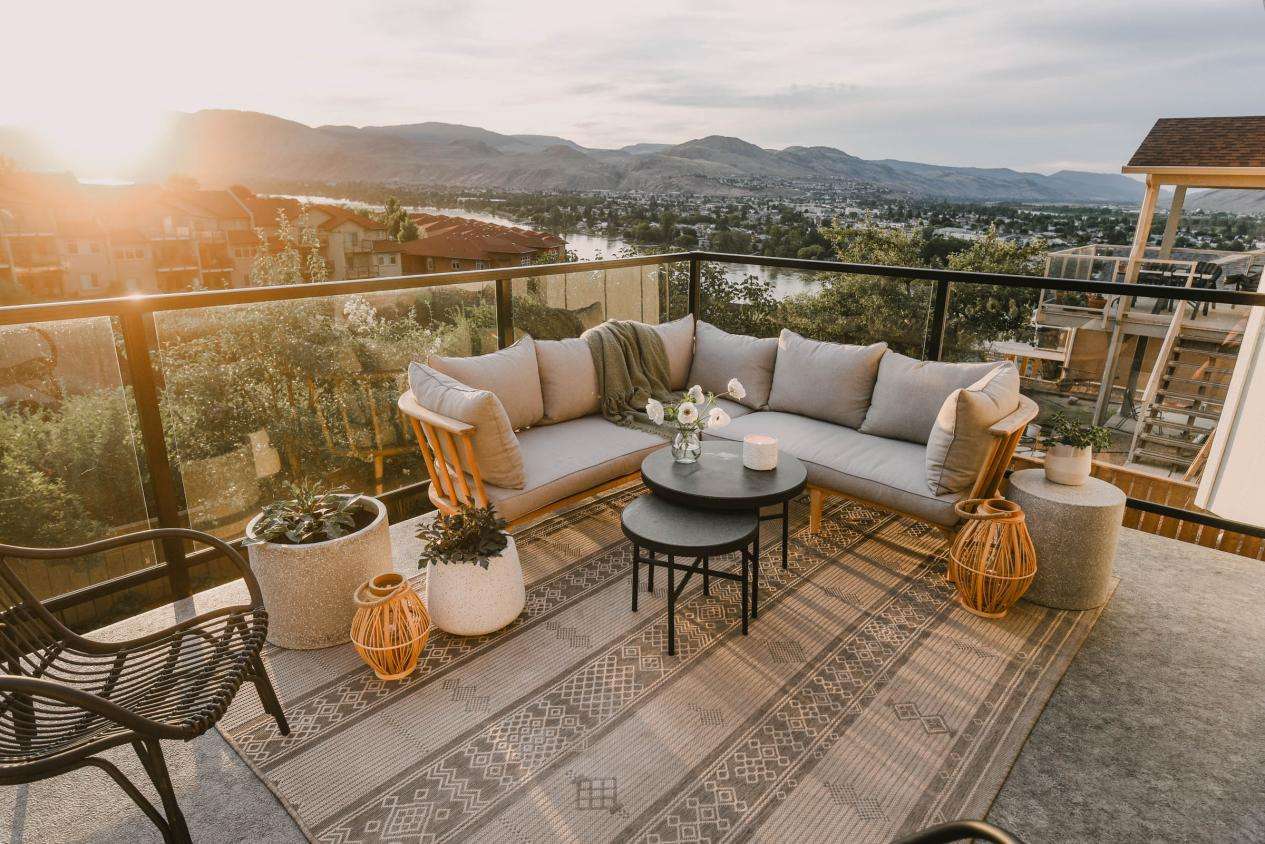
Myth 4: Thinking that “sunscreen” means it will never fade.
Even outdoor rugs can’t stay unfaded forever. The sun is fair; all materials will change color over time.
The painful price to pay: If you buy a dark blue or bright red rug, six months later you might end up with a “gradient” rug—the sun-facing half has turned grayish-white. This uneven fading is a visual disaster.
Lightning Protection Guide: Choose a subtle gray. I highly recommend a “gray that looks like it hasn’t been washed properly” or an earth tone. This color is the most sophisticated; it’s not only dirt-resistant (you won’t even notice a little dust), but even if it fades slightly, the difference is completely imperceptible. Also, look for solution-dyed fibers; these fibers are the same color inside and out, making them several times more sun-resistant than post-dyed fibers.
Myth 5: Not paying attention to the “overlock stitching,” the carpet turns into a “tassel.”
90% of people would overlook this detail. But it’s windy outdoors, and people will be walking around, so a poorly secured seam can be disastrous.
A painful lesson: My first cheap outdoor rug came apart because the seams were too loose. Within a summer, the edges were frayed and full of loose threads, and it tripped me up several times.
Lightning Protection Guide: Give it a gentle tug. First, check the edges after buying it; gently pull on the overlocked edge. If it feels loose, it definitely won’t last through the summer. Always choose products with precise overlocking and heavy-duty edging.
III. Extend lifespan: Lazy person’s daily care
Even the most durable outdoor rugs need a little care. Fortunately, they are much easier to maintain than indoor carpets.
Routine: Shake it every few days to remove fallen leaves and dust.
Aggressive cleaning: This is the most stress-relieving! If it’s dirty, just use the pressure washer in the garden ! Even the most stubborn mud won’t withstand this treatment. You can also use some dish soap to scrub it, then rinse it clean.
Drying: Make sure to dry the clothes thoroughly after washing. It’s best to hang them on a railing to ensure both sides are completely dry, preventing mold growth.
Winter preparation: If it snows where you live, roll it up (don’t fold it!) and store it in the storeroom. It will be ready to go again next year.
IV. Conclusion: Let the rug serve you, not the other way around.
Ultimately, carpets are meant to make us more comfortable outdoors, not to be bought as a “goddess” to be waited on.
Outdoor Rugs with the right material, sufficient size, and a cleverly chosen color . You’ll find that maintaining a high-quality terrace doesn’t actually require so much effort and wasted money.
Hopefully, this “avoiding pitfalls” guide will help you avoid some common mistakes. After all, what we all want is a life that “looks expensive but is worry-free to use,” right?
Ready to transform your outdoor space?

About Derek Cole
Derek Cole is the Lead Editor and Material Researcher at BuyOutdoorRugs. Based in the rainy Pacific Northwest, Derek treats outdoor styling as a discipline of durability. He manages the site’s rigorous vetting process to separate the durable from the disposable.
My Outdoor Living Journey
I’ll never forget my first real attempt at styling a patio. I bought a stunning jute rug, treating my deck like an indoor living room. And boy, did nature humble me.
One week of heavy rain later, that "perfect" rug had turned into a 50-pound, waterlogged sponge. It smelled like a swamp and trapped moisture against my wood decking.
I learned that day that you can’t just copy-paste indoor rules to the outside. I started digging deeper—moving away from "looks" to understanding solution-dyed fibers and weave density.
What I Do Here
A big part of my role at BuyOutdoorRugs is cutting through the marketing fluff. I analyze "boring" specs like weave patterns so you don’t have to guess.
It’s amazing how two rugs can look identical in a photo, but one will disintegrate in the sun while the other lasts for years.
See you on the patio,
- Derek