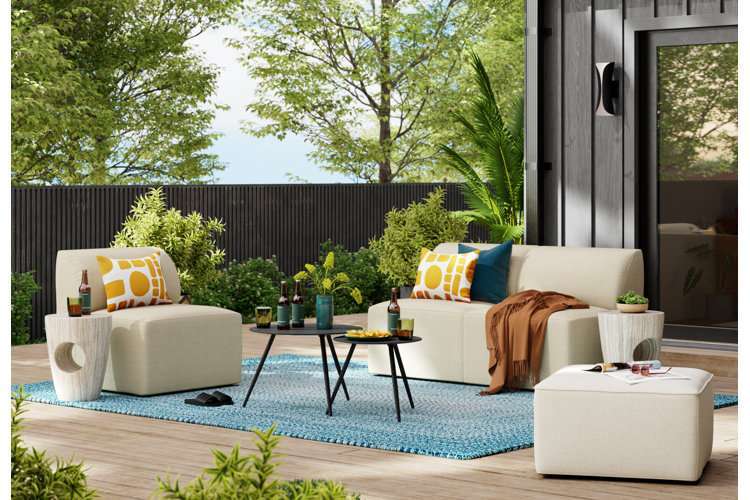
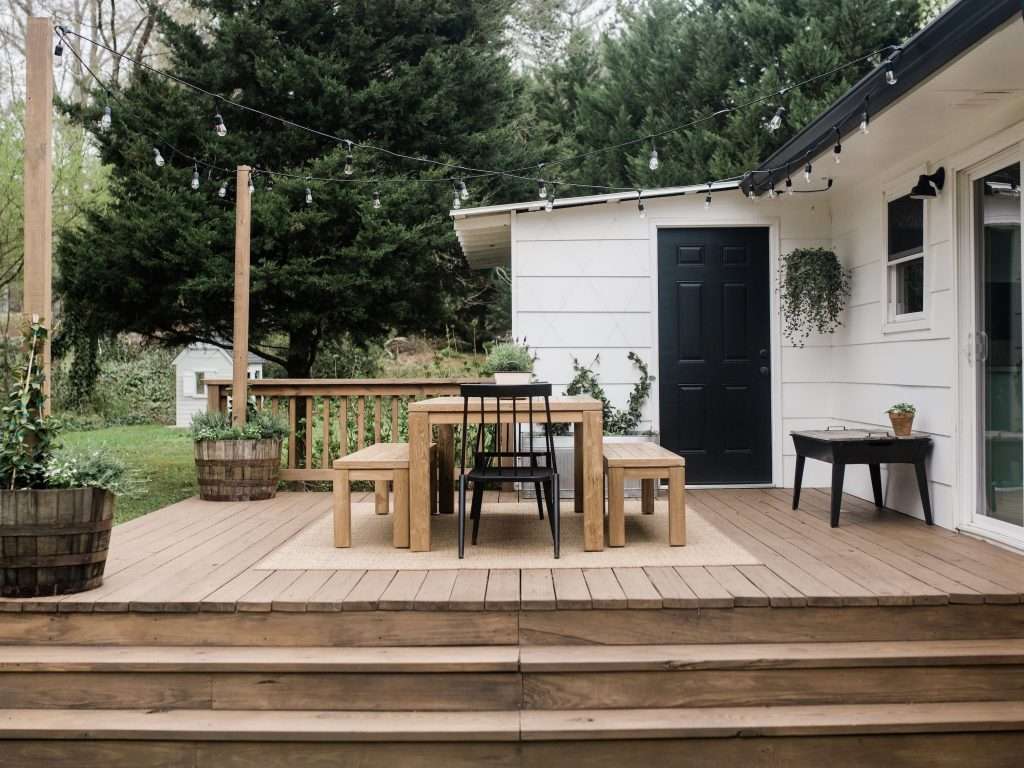
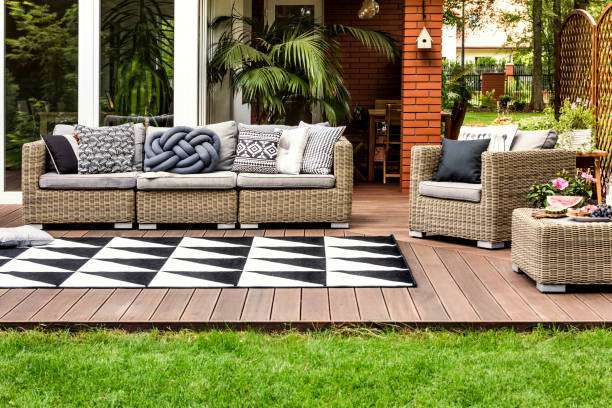
The Perfect Outdoor Rugs for Rainy Days: Effectively Prevent Mold Growth!
Hey everyone, backyard lovers! I’m your old friend, the home enthusiast who’s turned my patio into a “vacation retreat.” Today, let’s talk about a “century-old problem” that plagues all outdoor lovers— moldy outdoor rugs during the rainy season !
Have you ever fantasized about stepping barefoot onto a soft carpet on a rain-soaked terrace, coffee in hand, enjoying that unique tranquility? But what happens? One step and you’re either greeted by a wet, damp mess, or a pungent musty smell! Even worse, lifting the carpet reveals a floor covered in dark, moldy patches – a truly appalling sight. Don’t ask me how I know, because—I! Am! One! Found! That! Mistake!
I. The “Disaster” of Outdoor Rugs in the Rainy Season – My Mishap, Don’t Repeat My Mistakes!
I was out of my mind at the time, thinking that all ” outdoor rugs ” were the same. So I excitedly bought a rug with a nice pattern and a decent feel, thinking it would add some warmth to my patio. However, after a rainy season, my patio turned into a “mold hell”! The rug was soaked with water, heavy, and wouldn’t dry even after three days. It was also covered in specks of mold, and the smell… was awful! To make matters worse, because the rug wasn’t breathable, the wooden deck underneath also developed several black marks from the dampness, and I had to spend a lot of money to have it cleaned.
That feeling is like preparing a carefully crafted candlelight dinner, only to find the candles covered in mold! It’s infuriating and frustrating. From that moment on, I vowed to thoroughly understand the ins and outs of outdoor rugs and never let that heartbreaking experience happen again. This “rain-proof” buying guide is a summary of my own painful experiences, guaranteed to save you money and hassle, and even beginners can easily copy it!
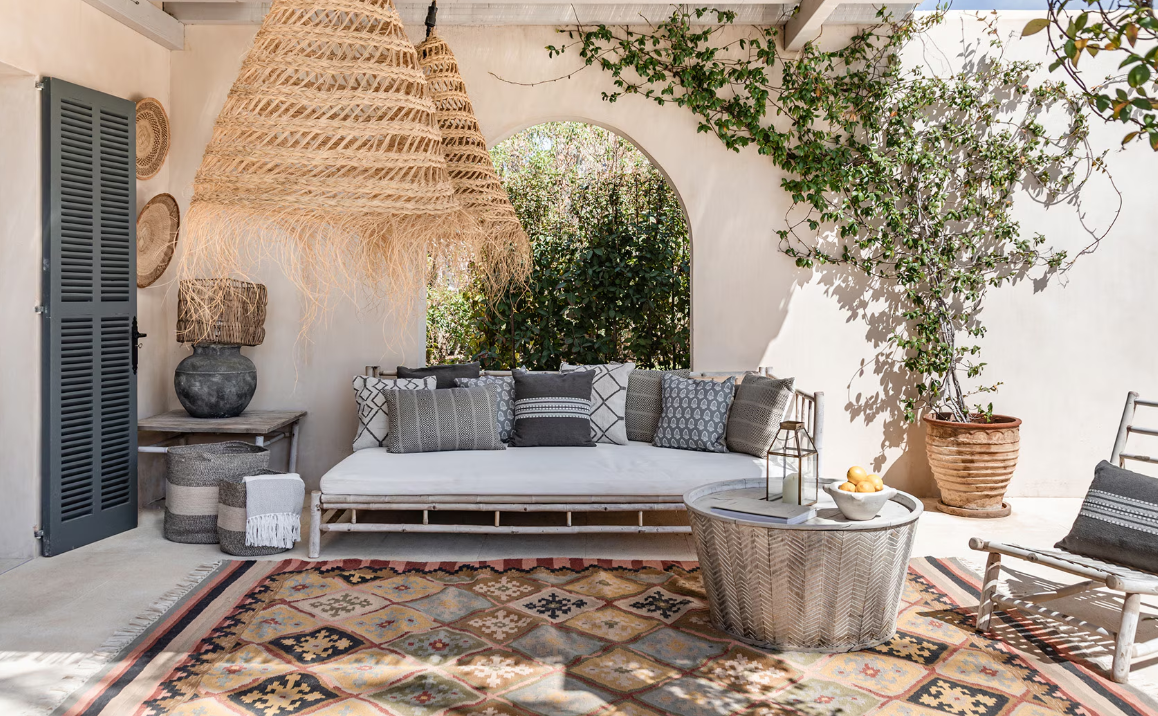
the Outdoor Rugs That “Rain God Doesn’t Love” : Material is King, Avoid These Pitfalls!
Why do some carpets crumble in the rain, while others remain steadfast and unaffected? The key secret lies in the material!
Why do ordinary carpets “die” when it rains?
- Poor breathability traps moisture, leading to mold growth: Many ordinary carpets, especially indoor carpets, are made of highly absorbent materials and have a dense, non-breathable weave. Moisture gets in but can’t escape, creating a breeding ground for mold due to prolonged dampness.
- Highly absorbent, like a sponge, it doesn’t dry easily and is as heavy as a brick: You’ll find that ordinary carpets become unusually heavy after getting rained on, and they don’t dry even after several days. This not only affects their use but also makes them prone to deformation.
- The Tragedy of Backing: Important! Don’t buy those outdoor rugs with rubber backing ! This is a lesson learned the hard way! My neighbor fell for it. His rubber-backed rug on his patio got stuck to his expensive wooden deck after being exposed to the summer heat. He couldn’t tear it off, and in the end, the rug and the deck were both ruined! This kind of rubber backing creates a sealed space at the bottom of the rug, trapping moisture inside, which makes mold grow faster. Moreover, it decomposes and releases harmful substances under high temperatures, making it a hidden killer.
Materials that are the “saviors” of outdoor rugs during the rainy season : What makes them so good?
Carpets truly designed for the outdoors are made with very particular materials! They’re like giving the carpet a high-tech “raincoat,” leaving no place for water droplets to stay.
Polypropylene: Lightweight and durable, it does not absorb water, just like putting a “raincoat” on a carpet.
-
- This is undoubtedly the king of outdoor rugs ! Its fibers are non-porous , meaning it hardly absorbs water. Water droplets that fall on it will either roll off or remain on the surface without penetrating.
- Based on my actual testing… : To test its drainage, I poured a basin of water onto a polypropylene carpet. The water droplets barely penetrated, and it dried easily with a cloth. Even after prolonged rain, it dries quickly without any worries about mold. Furthermore, it’s exceptionally durable, has strong UV resistance, and doesn’t fade easily.
Polyester fiber: It is slightly softer, UV resistant, and the color does not fade easily.
-
- Polyester outdoor rugs are softer to the touch than pure polypropylene, so if you prioritize a comfortable barefoot feel, you might consider them. They also offer good UV resistance and weather resistance, and retain color well.
- Based on my testing… : Polyester fiber carpets offer a comfortable feel underfoot, but compared to pure polypropylene, their drainage is slightly inferior. Patterns with a high weave density may require a longer drying time. Therefore, pay attention to their quick-drying properties when choosing one.
Polyurethane: Commonly used as a backing or coating to provide additional waterproofing and mildew resistance.
-
- As a coating or partial material, polyurethane can provide carpets with additional waterproof and mildew-proof protection. However, make sure it’s not the kind of backing that sticks to the floor.
The picky point for hardcore enthusiasts: Fiber resilience test (rule 4) – pinch it with your fingernail and see if it can bounce back immediately. This determines whether the furniture will have a “dead dent” after being pressed for a long time.
-
- A good outdoor rug , besides being mold-proof and moisture-proof, also needs to be durable. I have a little trick: pinch the rug fibers hard with your fingernail. If it springs back immediately after pinching, it means the resilience is good. This means that even if you put heavy outdoor furniture on it, it won’t leave any deep dents that are difficult to repair over time, and the rug will remain flat and beautiful.
III. Practical Purchase Tips: Besides the material, these details determine the “lifespan” of a carpet!
Looking at the material alone is not enough; the weaving technique, drainage design, and even the colors and patterns of the carpet all contain a great deal of knowledge.
Knitting Technique: Flatweave is the only solution for families with young children and pets.
- My neighbor’s mistake: He bought a high-pile outdoor rug for a more comfortable feel underfoot . The result? His Golden Retriever ran over, scratched it with its paw, and in just two weeks, the rug became a “chicken coop”! Loose threads were everywhere, a truly horrific sight. (Rule 2) If you have furry friends, you must choose a flatweave rug; otherwise, your cat or dog’s paws will turn the rug into a chicken coop.
- Advantages of flat-weave rugs: Flat-weave rugs have no pile and a smooth surface. This not only makes them less prone to accumulating dirt and grime, making it easy to clean dust, leaves, and mud, but more importantly, they won’t be scratched by pets’ claws ! For families with children or pets, or those who prioritize ease of maintenance, flat-weave is simply a “miracle design.”
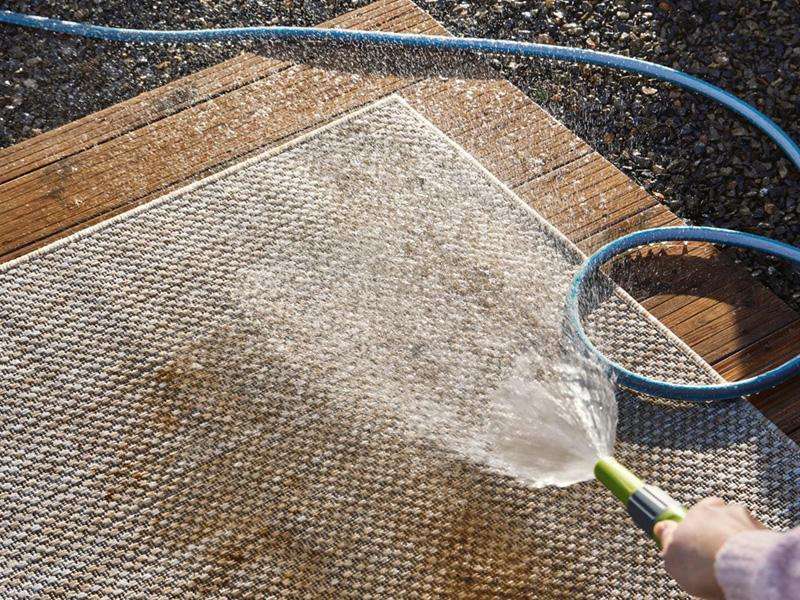
- Rinse-off-the-dry-friendly: Another advantage of flat-weave carpets is their “rinse-off-the-dry-friendly” nature. Dirty? Just rinse them with a hose! Mud, juice, pet poop—they all handle it easily without any carelessness.
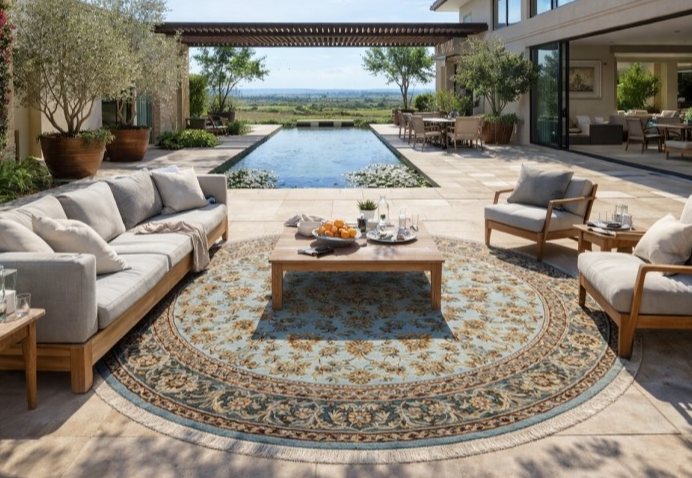
Drainage design: The secret to keeping water “nowhere to go”
In addition to the material being non-absorbent, the carpet’s structure must also allow water to drain quickly.
- Open weave structure: High-quality outdoor rugs typically feature a relatively open weave , allowing water to pass directly through the rug without accumulating on the surface.
- Back design: The back of the carpet also needs to be breathable to avoid obstructing drainage from the floor below. Some carpets have raised designs on the back to create an air circulation layer and speed up drying.
- To test its drainage, I poured a basin of water on it… : I’ve personally tested several good outdoor rugs , and the water flows over the surface very smoothly with almost no residue. This ensures that carpets and floors dry quickly, completely preventing mold.
Colors and patterns: Don’t just look at the appearance; practicality is the key!
When choosing a carpet, appearance is certainly important, but given the complexity of the outdoor environment, practicality must come first!
- Rule 3: Light-colored rugs look beautiful in photos, but if you have a muddy backyard, you’ll want to throw them away after a week.
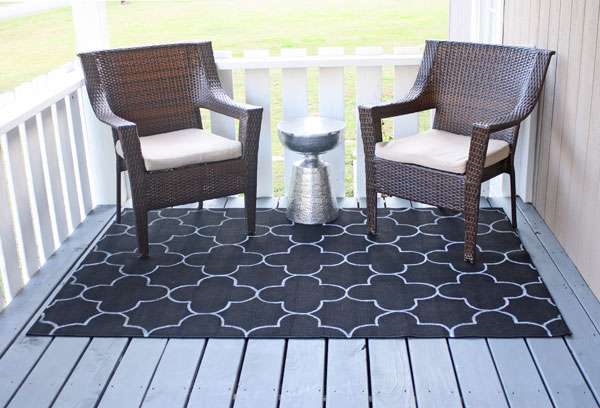
- Trust me, you’ll regret choosing outdoor rugs in too light a color! Leaves, dirt, dust, and even a drop of coffee will leave noticeable marks on light-colored rugs. Opting for stain-resistant dark or gray tones, or designs with intricate patterns, will effectively “hide” everyday small stains , saving you from daily cleaning.
- UV Resistance: Ensure that the carpet you choose has been treated with UV-resistant materials or processes . Otherwise, even the most beautiful color will fade and look like an old rag after a few months of exposure to sunlight.
IV. Lightning Protection Checklist and Selection Axis: Lazy people can just copy this guide!
After all that, I know what everyone’s most concerned about is: how do I choose? Don’t worry, I’ve compiled my tips for avoiding pitfalls for you. Just copy my advice and you’re guaranteed to avoid any mistakes!
- Rule 1: Don’t be fooled by the feel! When choosing a rug for your patio, “durability” always comes before “softness.” The outdoor environment is complex, so durability, stain resistance, and ease of cleaning are key.
- Rule 2: If you have pets, you must choose flatweave carpet, otherwise your cats’ and dogs’ claws will turn the carpet into a chicken coop. This is a lesson learned the hard way by pet-owning families!
- Rule 3: Light-colored rugs look beautiful in photos, but if you have a muddy backyard, you’ll want to throw them away after a week. Stain resistance is an invisible indicator of outdoor rug quality .
- Rule 4: A simple trick to judge quality: Pinch the carpet fibers firmly with your fingernail. If they spring back immediately after being pinched, the resilience is good, and there won’t be any deep dents even after furniture has pressed against them for a long time. This little test can help you judge the quality of the carpet.
- Rule 5: Don’t buy those with rubber backing! Under high temperatures and direct sunlight, they’ll stick to your expensive wooden deck and be impossible to remove. Remember my neighbor’s painful lesson!
- Rule 6: It’s better to buy a size up. A small rug looks like a “patch” on a patio, completely lacking in grandeur. The larger the size of outdoor rugs , the more cohesive and sophisticated they can create.
Lazy Person’s Shopping Guide (Scenario vs. Recommendation)
Scenario requirements | Preferred materials | Recommended features | Lightning protection point |
|---|---|---|---|
Rainy and humid | polypropylene | Superior drainage, quick-drying, mildew resistant, lightweight and durable | Pay attention to the weave density to avoid an overly “plastic” look. |
Exposed to the sun | Polyester fiber | UV resistant and colorfast, comfortable on feet, with good color retention. | Its drainage performance is not as good as pure polypropylene, so attention should be paid to its quick-drying properties. |
Pets/Children’s Families | Plain weave polypropylene | Wear-resistant, easy to clean, not prone to snagging, and can withstand vigorous washing. | The texture isn’t as soft as high-pile fabric; it might feel slightly rougher, but its practicality is top-notch. |
High-value appearance/photography | Polyester fiber | Rich patterns and vibrant colors enhance the aesthetic appeal. | It needs to balance stain resistance and UV protection, and avoid light colors or colors that are prone to fading. |
Limited budget | polypropylene | High cost-performance ratio, strong basic durability, and easy to clean. | Creases are easily formed, and some styles feel slightly stiff; this needs to be considered. |
Pursuing barefoot comfort | Polyester fiber | Relatively soft, but still subject to the material limitations of outdoor rugs. | Softness and durability are often inversely proportional and must be balanced. |
V. Routine Maintenance: Keep Your Outdoor Rugs “Forever Young”
Choosing the right rug is important, but regular maintenance is equally crucial. However, don’t worry, outdoor rugs are much easier to care for than indoor carpets!
- Regular cleaning:
- Broom/Vacuum cleaner: To deal with everyday dust, leaves, and small debris, just sweep with a broom or vacuum with a vacuum cleaner, and you’re done in a few minutes.
- Water hose rinsing: If the carpet gets dirty, with mud or juice stains, I just rinse it vigorously, no problem at all! I grab the garden hose and rinse the carpet directly to wash away the stains.
- White vinegar deodorizing method: Tip : If your carpet has a slight odor, or if you want to thoroughly disinfect it, mix 1/4 cup white vinegar and 1/4 cup water, put the mixture in a spray bottle, spray it evenly on the carpet, let it sit for a few minutes, and then rinse it clean with a hose. Natural and effective!
- Quick drying: After washing, hang the carpet up or lay it out in a sunny, well-ventilated place to ensure it is completely dry . Never store it while it’s damp, otherwise all your previous anti-mold work will be wasted.
VI. Conclusion: Copy my homework and turn your terrace into your “vacation paradise”!
outdoor rugs that even the rain can’t stop. From the material to the weave, from drainage to the color, every detail determines your patio experience. Don’t let moldy rugs ruin your good mood anymore!
If you’re like me and hate the hassle, just copy my advice and choose according to my summarized “golden rules” and “lazy person’s shopping coordinates,” and you definitely won’t make any mistakes! Choosing the right rug will allow you to truly enjoy the cozy feeling of “vacationing” on your own terrace. Whether it’s sunny or drizzling, your terrace can become your favorite corner.
Take action now! Transform your terrace into a “vacation retreat” that your neighbors will envy!

About Derek Cole
Derek Cole is the Lead Editor and Material Researcher at BuyOutdoorRugs. Based in the rainy Pacific Northwest, Derek treats outdoor styling as a discipline of durability. He manages the site’s rigorous vetting process to separate the durable from the disposable.
My Outdoor Living Journey
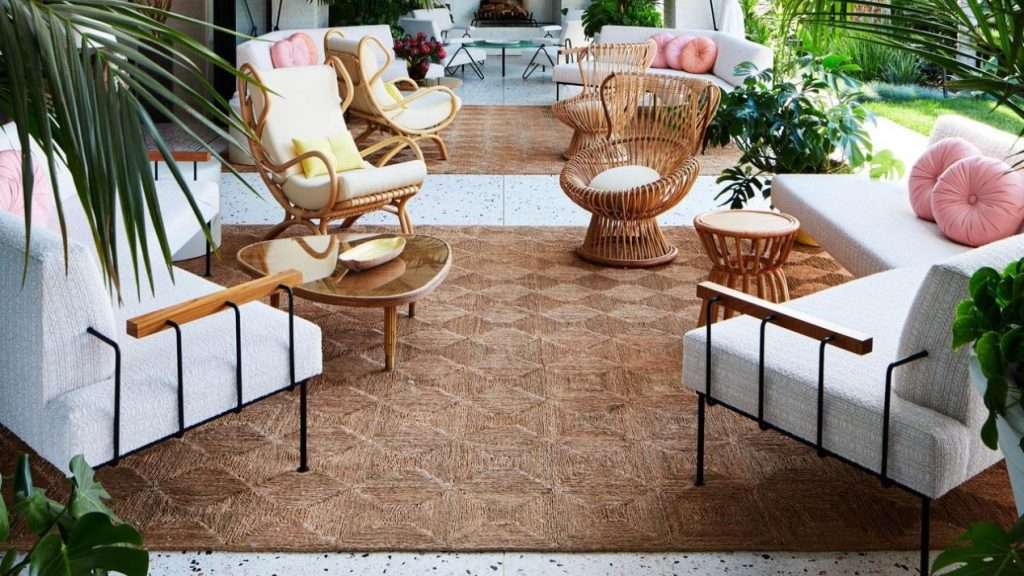
I’ll never forget my first real attempt at styling a patio. I bought a stunning jute rug, treating my deck like an indoor living room. And boy, did nature humble me.
One week of heavy rain later, that "perfect" rug had turned into a 50-pound, waterlogged sponge. It smelled like a swamp and trapped moisture against my wood decking.
I learned that day that you can’t just copy-paste indoor rules to the outside. I started digging deeper—moving away from "looks" to understanding solution-dyed fibers and weave density.
What I Do Here
A big part of my role at BuyOutdoorRugs is cutting through the marketing fluff. I analyze "boring" specs like weave patterns so you don’t have to guess.
It’s amazing how two rugs can look identical in a photo, but one will disintegrate in the sun while the other lasts for years.
See you on the patio,
- Derek