Polypropylene vs. Polyester: Who is the True “King of Durability” for Outdoor Rugs?
My yard is like my second face; I always try to keep it presentable and comfortable.
But after all these years of effort, I’ve realized that for many things, just looking at the surface isn’t enough. Outdoor Rugs are one of those things.
It not only needs to blend into the overall visual design, but also needs to withstand wind, sun, rain, burial, and even the “ravages” of a Saturday barbecue party.
When I first started buying outdoor furniture, like most people, I only focused on its appearance and how it felt at first glance. As a result, I made quite a few mistakes.
Some rugs remained damp for days after rain, developing an indescribable musty smell; others began to fall apart at the edges in less than a summer, looking like they’d been scratched by a cat; and still others faded faster than my old jeans.
These painful experiences taught me that the true quality of outdoor rugs lies in the materials themselves, not just in those low-saturation “sophisticated grays.”
Many people choose outdoor rugs and the first thing they do is take off their shoes and step on them to feel how soft they are.
But honestly, if you want that silky feel, I suggest you leave the rug indoors.
The outdoor environment is complex, and durability and softness are often inversely proportional.
Today, let’s have a “hardcore” showdown and talk about the two most common materials on the market: polypropylene (PP) and polyester, and see which one is your true outdoor savior.
Contestant 1: Polypropylene (PP) – A “Doer” You Might Underestimate
Polypropylene, abbreviated as PP (sometimes also called Olefin), is like an unsung blue-collar worker in the outdoor rugs industry. It doesn’t win by being soft, but it wins by being sturdy and durable.
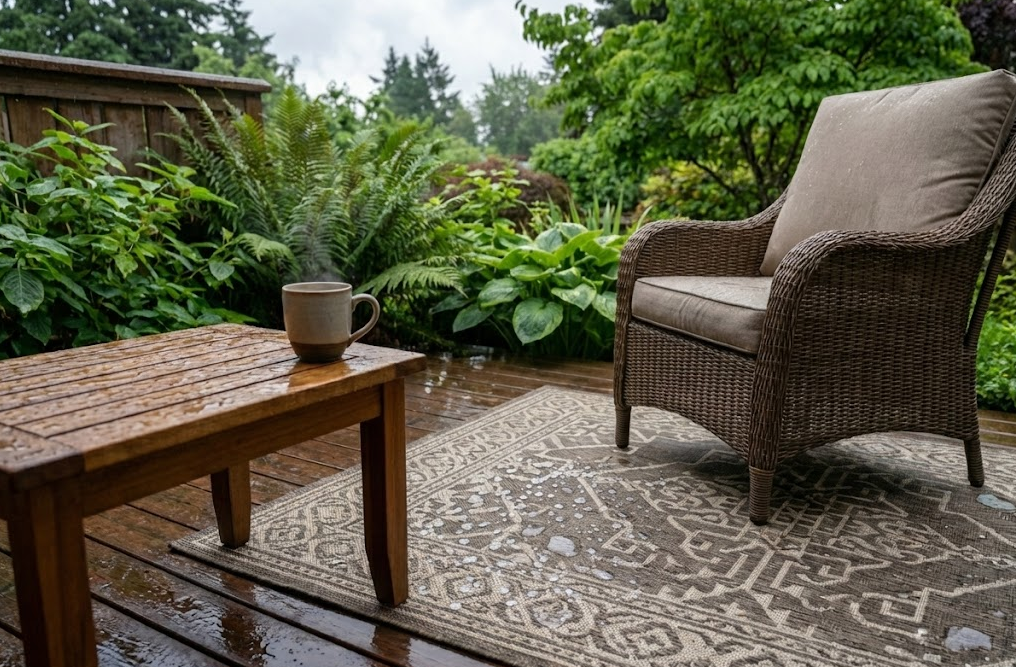
PP’s secret weapon: Natural hydrophobicity. The structure of PP fibers makes it inherently highly hydrophobic, absorbing almost no water.
What does this mean? It means that rainwater falling on it will either bead up and roll off or quickly evaporate.
This property eliminates the conditions for mold growth at its source.
At the same time, PP has excellent wear resistance and tear resistance, making it a perfect choice for areas that are frequently stepped on (such as under the dining table).
Advantages: Why can PP withstand wind and rain?
- Exceptional durability: The fibrous structure is strong and resistant to wear.
- Excellent waterproof and mildew-proof properties: it absorbs almost no water and dries quickly after rain.
- Easy to clean and maintain: Most stains are not easily penetrated; a quick rinse with water or a simple wipe with soapy water will suffice.
- High cost-performance ratio: It is usually more economical than high-performance materials such as nylon.
Disadvantages and the Truth: If you’re expecting a silky feel…
PP carpets are generally quite stiff and have a noticeable plastic feel.
Although technology has advanced and some PP carpets now mimic a wool texture, overall, they weren’t designed for a “walking on poop” feel.
But I must remind you: don’t be fooled by the “feel.” Outdoors, this stiffness is precisely proof of its durability. If a carpet feels too soft, it often means low fiber density, making it more prone to absorbing water and trapping dirt.
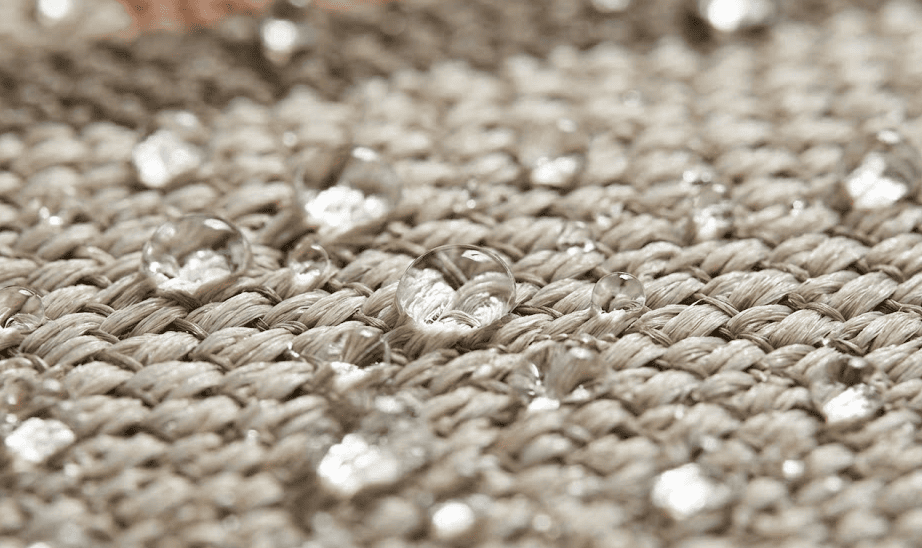
Real-world test: My PP outdoor rug has been in service for two years. Although there’s some wear on the edges, the main color is still great.
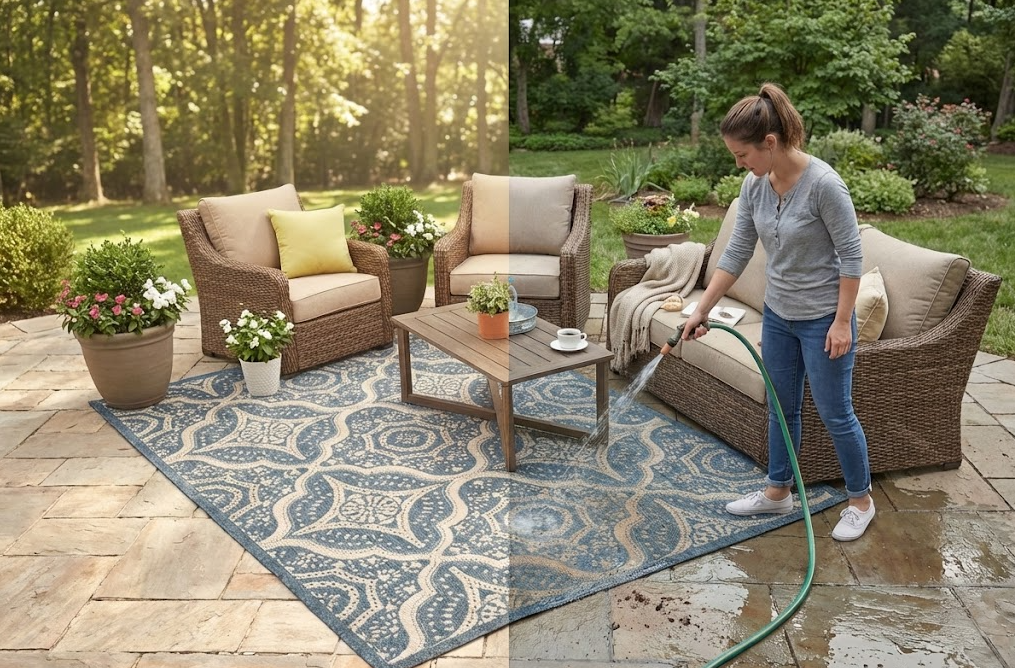
Once, the kids spilled grape juice on it, and because the liquid didn’t seep in, I just used a pressure washer to clean it.
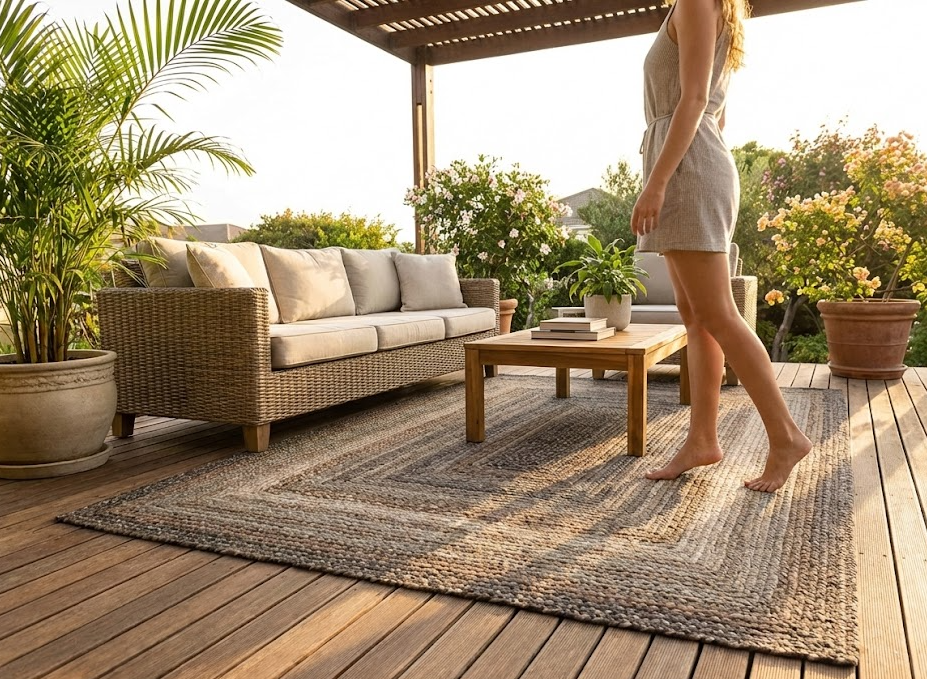
The feel of going barefoot to get the newspaper on a Sunday morning, while not amazing, is practical enough—at least my feet are dry, not sticky and damp.
For someone like me who “loves to tinker but hates hassle,” it’s truly worry-free.
Contestant Two: Polyester – A Subtle Trick Beneath Its Soft Touch
Polyester, also a synthetic fiber, is favored by many “aesthetic enthusiasts” because of its soft touch and vibrant colors.
Understanding Polyester: What Have You Paid for in exchange for its “softness”?
The most distinctive feature of polyester carpets is their softness.
Their texture is closer to that of indoor carpets, and because of their excellent dyeability, their colors are often more vibrant and their patterns more diverse.
Furthermore, they have high colorfastness and excellent UV resistance.
Advantages: It brings a touch of indoor atmosphere.
- Soft and comfortable: feels great on the feet, skin-friendly, and suitable for walking barefoot.
- Vibrant and long-lasting colors: High color fastness, not easy to fade.
- UV protection: Performs better in dry areas with plenty of sunshine.
Disadvantages: Hidden Maintenance Challenges.
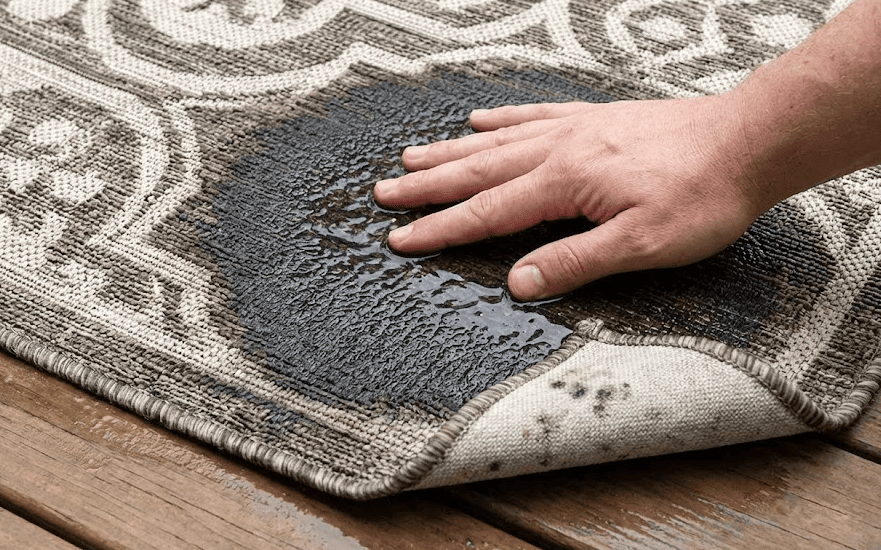
Polyester’s biggest weakness lies in its absorbency.
It absorbs moisture like a sponge, making it exceptionally heavy after rain and taking a long time to dry.
Prolonged dampness can lead to mold growth.
Furthermore, polyester fibers tend to “collapse” and lose their fluffiness after prolonged foot traffic.
My Polyester Experiment: A Year of “Softness” and the Ensuing Regret
I was once captivated by a beautifully patterned polyester outdoor rug.
Initially, it felt wonderful, but after every rain, it turned into a giant, heavy, damp sponge that just wouldn’t dry.
Here’s a simple drainage test tip: pour a cup of coffee into it first. If it absorbs water instantly like a sponge and the water can’t be wiped away, return it immediately.
My polyester rug did just that; after forgetting to drain the water promptly several times, mold grew on the back. Ultimately, I had to throw it away prematurely.
The ultimate showdown: Polypropylene vs. Polyester (Data Speaks)
To make the comparison more intuitive for you, I have compiled this table of core parameters:
| Feature | Polypropylene (PP) | Polyester |
| Durability | Excellent (wear-resistant, tear-resistant) | Good (prone to flattening and fuzzing) |
| Waterproof | Highly hydrophobic (quick-drying, mildew-proof) | Highly absorbent (dries slowly, prone to mold). |
| UV protection | Good (may fade slightly) | Excellent (high colorfastness) |
| Feel | It’s rather hard (it feels like plastic). | Soft (comfortable and skin-friendly) |
| Cleaning and maintenance | Extremely easy to clean (simply rinse with water). | Relatively difficult (highly absorbent, prone to staining) |
| Price | Affordable | Relatively high |
Choose Your Champion: Which Material Suits Your Outdoor Life?
There is no absolute “best”, only the lifestyle that is most suitable for you.
- rainy climates.)For those seeking a “one-and-done” solution: PP is the top choice. If you’re like me and want outdoor rugs that you can buy and then worry about, withstanding all kinds of weather and daily use, then polypropylene (PP) is your best option. It’s stain-resistant, quick-drying, and easy to clean, making it ideal for frequent use or rainy areas. (Check out this rain protection guide for more information on the best outdoor rugs for Rainy Climates)
- For barefoot brunch lovers: Polyester is an option (but at a cost). If you’re obsessed with the feel and don’t mind putting in more cleaning effort for that softness (like bringing it indoors to dry after rain), then polyester might be for you. But make sure your patio is sheltered or you live in a dry area.
- , stainFor families with children and pets: Stain prevention is paramount. For families with pets, stain prevention is the top priority. The hydrophobic nature of PP (polypropylene) makes juice and mud stains impossible to miss, making cleaning incredibly easy. (A must-read for pet-owning families: Best Outdoor Rugs for Dogs)
Beyond Material: Some Buying Tips from Experts
Choosing the right material is only the first step; these details are also crucial for making your carpet last for many more years.
- an “unwashedColors: While vibrant colors are tempting, in my experience, choosing a “unwashed gray” is actually the most sophisticated. This is because it blends perfectly with outdoor dust and dirt, saving you from having to rinse it with a hose every week. This low-saturation earth tone is a true blessing for lazy people.
- The Importance of Edge Sealing: When you buy a carpet, don’t just look at the pattern; first, check the edge sealing. If the edge sealing is too loose, your carpet will fall apart like it’s been scratched by a cat within a summer. Tight edge sealing ensures the longevity of your carpet.
- Guide.Regarding the obsession with size: Don’t try to save money by buying a small rug. A rug that’s too small will make your entire patio look like a cheap showroom. Go for bigger rather than smaller; make sure the front legs of your furniture rest on the rug—this “enveloping” feeling is something a smaller rug can’t provide. (Unsure about the size? Check out this ultimate guide, the Ultimate Outdoor Rug Sizing Guide.)
“favorite.”In summary: Find your “favorite”.
Choosing outdoor rugs is like choosing a life partner; there is no perfect one, only the right one.
For me, durability and ease of use are the top priorities when it comes to outdoor gear. So I unhesitatingly choose polypropylene (PP).
But if you’re willing to put in a little more effort for aesthetics and feel, polyester is also a viable option.
Hopefully, this comparison will help you clarify your thoughts. After all, a well-maintained yard can add a lot of comfort to life.
Frequently Asked Questions: Polypropylene vs. Polyester
Which is better for outdoor rugs: polypropylene or polyester?
Does polypropylene feel like plastic?
Are polyester rugs waterproof?
Which rug material fades less in the sun?

About Derek Cole
Derek Cole is the Lead Editor and Material Researcher at BuyOutdoorRugs. Based in the rainy Pacific Northwest, Derek treats outdoor styling as a discipline of durability. He manages the site’s rigorous vetting process to separate the durable from the disposable.
My Outdoor Living Journey
I’ll never forget my first real attempt at styling a patio. I bought a stunning jute rug, treating my deck like an indoor living room. And boy, did nature humble me.
One week of heavy rain later, that "perfect" rug had turned into a 50-pound, waterlogged sponge. It smelled like a swamp and trapped moisture against my wood decking.
I learned that day that you can’t just copy-paste indoor rules to the outside. I started digging deeper—moving away from "looks" to understanding solution-dyed fibers and weave density.
What I Do Here
A big part of my role at BuyOutdoorRugs is cutting through the marketing fluff. I analyze "boring" specs like weave patterns so you don’t have to guess.
It’s amazing how two rugs can look identical in a photo, but one will disintegrate in the sun while the other lasts for years.
See you on the patio,
- Derek