Best Outdoor Rugs for Rainy Climates: Surviving the Ultimate Rain Test
The little touches in the yard are meant to be a spice of life. A suitable outdoor rug can indeed instantly enhance the atmosphere of a terrace.
But if you live in a city like mine, where there are frequent downpours and consistently high humidity (like the Pacific Northwest), then choosing outdoor rugs is much more than just about looks.
This is more like an “ultimate test” of your vision and logic—the tug-of-war between aesthetics and practicality becomes especially real under the baptism of dampness and rain.
I’m not the kind of person who would sacrifice everything for looks. My bottom line is clear:
- Will this rug withstand the grease and grime from Saturday’s barbecue party?
- Can we still maintain our dignity after a week of continuous rain?
I avoid those “internet celebrity” products that look beautiful but are so difficult to maintain that they make you want to starve yourself.
Therefore, this article won’t delve into empty talk. I’m not aiming for the most expensive, but rather durability and peace of mind. Hopefully, my own “tuition fees” can help you avoid unnecessary pitfalls.
Chapter 1: Rainwater, the “Ultimate Examiner” of Outdoor Rugs
“waterproof.” Don’t naively assume that outdoor rugs are perfectly safe just because they’re labeled “Waterproof.” The real impact of rain on rugs is far more complex than we imagine.
1.1 Mold and Odors: A Breeding Ground for Moisture
A consistently damp environment is a playground for mold and bacteria. Even if a carpet surface claims to be non-absorbent, mold will quietly grow if water accumulates underneath or moisture cannot dissipate over a long period.
Imagine this: on a Sunday morning, you walk barefoot onto the patio with your coffee, only to step on a carpet with mold stains and even a musty, stale smell. That feeling is probably worse than a rainy day itself.
1.2 Fading and Aging: The Dual Impact of Sunlight and Rain
Rainy climates are often accompanied by intermittent periods of intense sunlight. Ultraviolet rays are responsible for fading the color, while rainwater accelerates the aging of the fibers.
A poor-quality outdoor rug, if it cannot resist the erosion of both, will experience a precipitous drop in appearance within a summer, resembling an old rag.
1.3 Structural Damage: From Loose Edges to Overall Deformation
Even carpets have their “physical temperament.” In the repeated cycles of wetting and drying, inferior fibers expand and contract, causing the weave to loosen.
I once bought a cheap one, and after two years, the edges looked like they’d been scratched by a cat, with loose threads everywhere. The cost of choosing the wrong carpet isn’t just money; it’s also the loss of your expectations for outdoor living.
Chapter 2: Materials are fundamental: Which outdoor rugs can “hold up”?
Materials are the cornerstone of outdoor rugs’ performance. In rainy climates, some materials are your allies, while others are “delicate ladies.”
rug2.1 Polypropylene (PP): The “all-rounder” in the outdoor rugs world.
polypropyleneIf there is one material that is the “hexagon warrior” in the outdoor rug world, it is Polypropylene (PP).
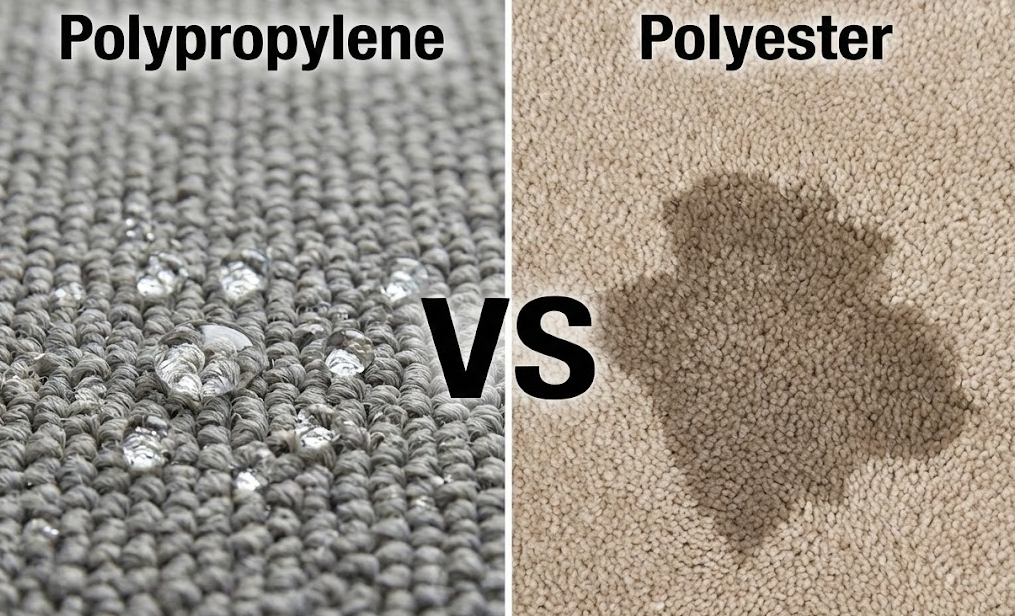
Why this one? The logic is simple: it hardly absorbs water.
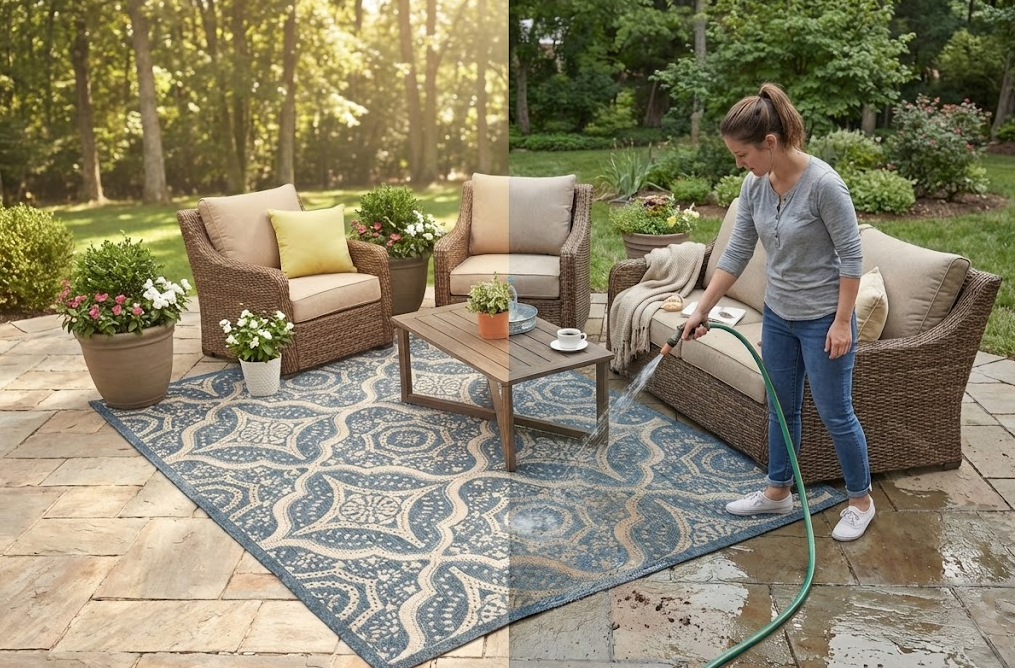
This means that rainwater either evaporates or runs away, leaving no place for mold to settle. At the same time, high-quality PP fibers offer excellent resistance to UV rays. Cleaning is also incredibly simple and straightforward—just a rinse with a hose, and it’s done. It’s perfect for someone like me who “loves to tinker with the yard but is extremely averse to hassle.”
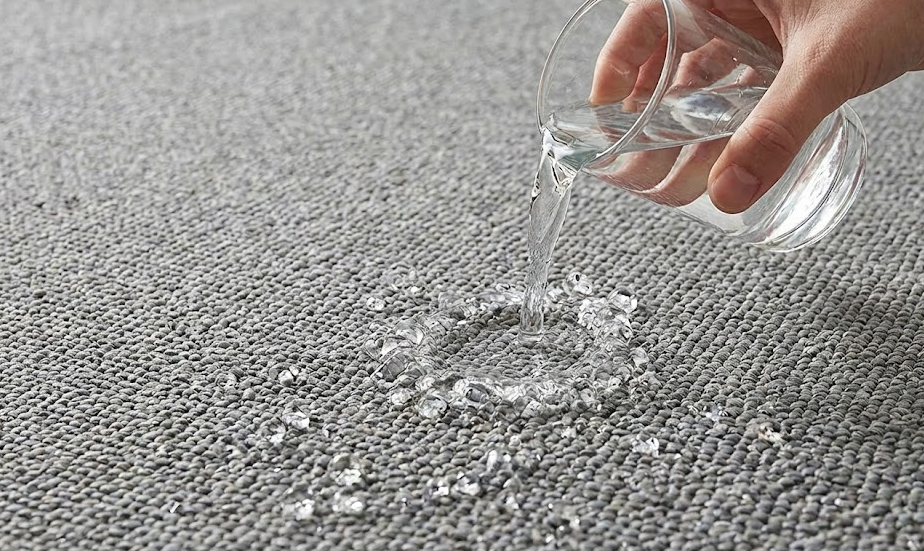
However, when choosing PP material, you need to accept the reality that durability and softness are often inversely proportional. Many people are easily misled by the silky feel of carpets in stores, but outdoors, this feel often means fragility.
PP material usually feels relatively stiff, but this is precisely proof of its robustness. If you want the cloud-like feeling of an indoor carpet, it’s recommended to leave it indoors.
Want to learn more about the advantages of PP material? In-depth comparison here: Polypropylene vs. Polyester Showdown
Practical Recommendation: Washable Outdoor Woven Rugs
If you are looking for a PP rug that has both a handcrafted feel and can withstand rain, Flatweave is the best choice.
- artisanal hand-craftedKey selling point: Although it is made of PP fiber, it uses Artisanal Hand-Crafted technology, which adds a textured feel.
- Applicability: Kid-approved and pet-friendly. It can withstand any kind of rough treatment.
- Maintenance: Truly Easy Washable. Simply vacuum, rinse with soapy water, and let air dry.
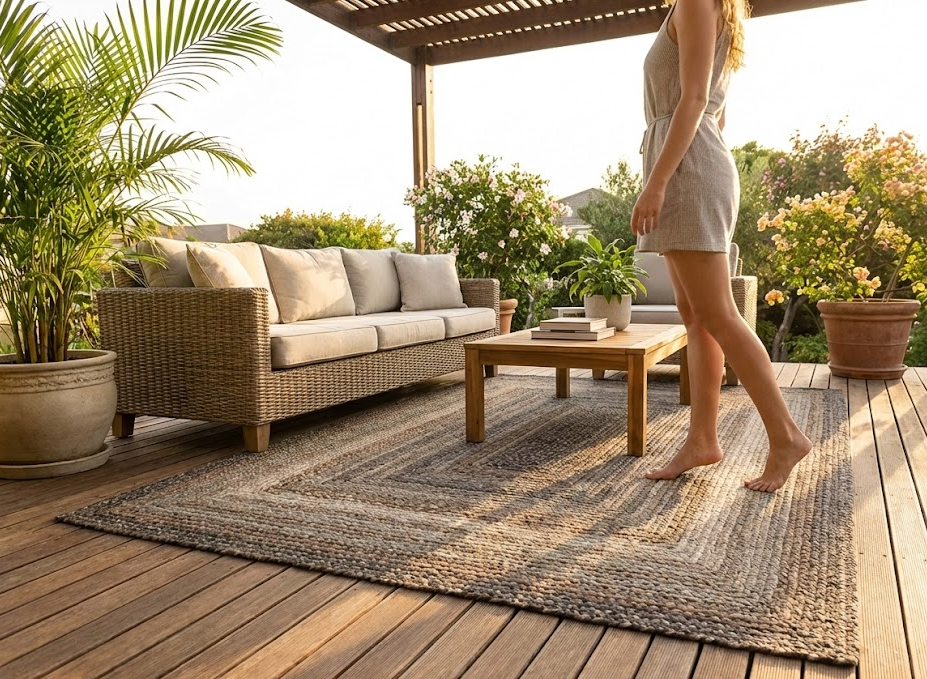
2.2 Jute: A Battle Between Aesthetics and Reality
I admit that jute’s natural, low-saturation color can indeed bring a sense of sophistication to a space. However, as a pragmatist, I must pour cold water on this:
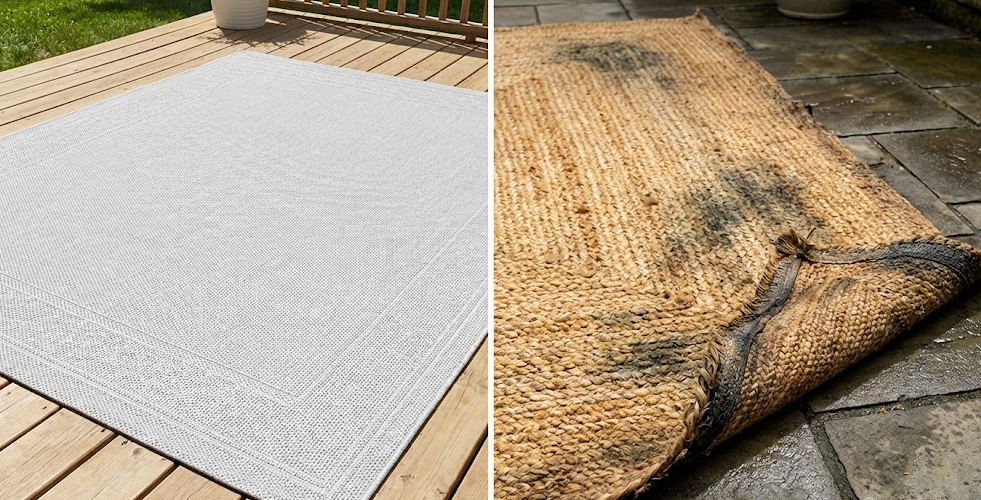
Jute absorbs water!
In rainy climates, this is a fatal flaw. Once it absorbs water, it is extremely prone to mold and rot.
“weather-resistant,”Recommendation: If you have a particular fondness for handmade jute rugs, please make sure to place them in a well-covered area completely protected from rain (such as a sunroom). Although the manufacturer labels them as “Weather-resistant,” the physical properties of natural fibers mean they cannot be handled as freely as PP.
Chapter 3: Besides materials, these details determine the “lifespan” of a carpet.
Looking at the materials alone isn’t enough. A true outdoor rug that can “survive” the rainy season also needs to excel in the details.
3.1 Overlocking: The Overlooked “Invisible Guardian”
Instead of looking at the pattern, the first thing to do when you get a carpet should be to check the overlocking.
If the overlocking is too loose, under the erosion of rain and repeated foot traffic, the edges of your carpet will crumble like they’ve been scratched by a cat within a summer. Tight overlocking is the last line of defense for a carpet against harsh weather.
3.2 Drainage and Drying Speed: The Carpet’s “Self-Rescue” Ability.
A carpet’s drainage capability involves more than just the material’s non-absorbency; it also includes its weave structure. Don’t just listen to the manufacturer’s claims; conduct a simple drainage test yourself:
- After buying it, pour a cup of coffee into it.
- of a stain it leaves.Observe how quickly it penetrates and how much it leaves a stain.
This method, though “brutal,” is very effective. If the coffee penetrates quickly and leaves a noticeable stain, its ability to dry quickly during the rainy season is questionable.
3.3 Color Selection: Sophistication and “Dirty Concealment”
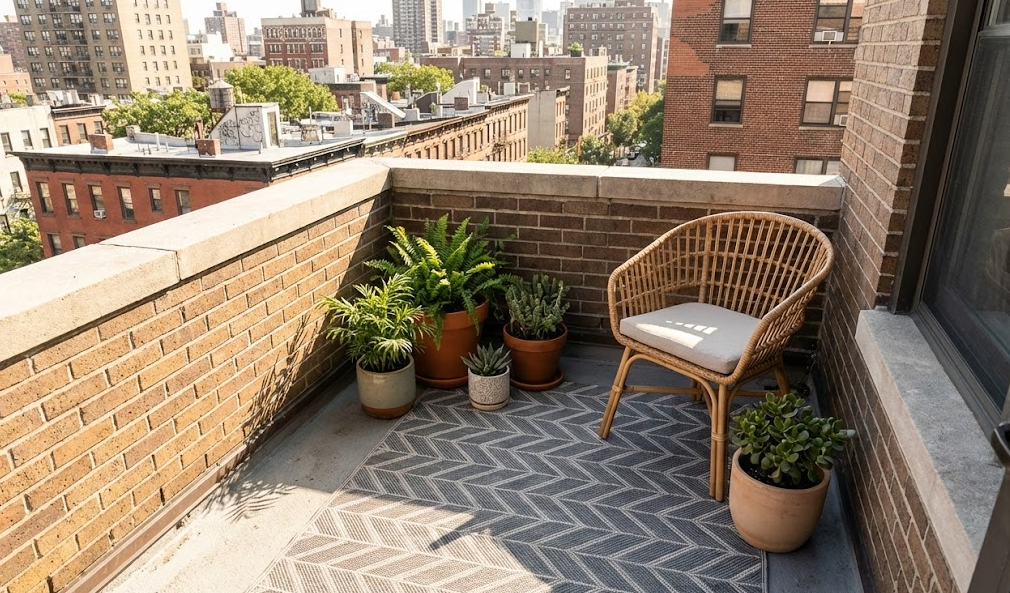
In rainy areas, mud and water splashes are inevitable on the ground. When it comes to color selection, that “unwashed gray” is actually the most sophisticated.
I’m not referring to dirt, but rather low-saturation earth tones or cement gray. They perfectly blend in with dust and water stains, saving you from having to rinse them with a hose every week. In contrast, a pure white carpet is practically torture during the rainy season.
3.4 Size Considerations: Don’t Let Small-Sized Rugs Ruin the Overall Atmosphere.
Regarding size, most people buy rugs that are too small because they’re worried about the cost. However, I must point out that a rug that’s too small will make your entire patio look like a cheap showroom.
The ideal size for outdoor rugs should cover the main activity areas. For example, the rug under the dining table should still have its back legs on the rug even when the chair is pulled out. This is called a “feeling of being enveloped.”
Chapter 4: Daily Maintenance and Care in Rainy Climates
Even if you choose the right outdoor rugs, routine “minor maintenance” is still necessary.
Regularly perform “vigorous” cleaning:
For PP materials, regularly vacuum up fallen leaves. If it gets dirty, rinse it directly with a water hose, using mild soapy water.
Seasonal Storage:
If you encounter several weeks of continuous rainy season, or if you won’t be using your patio during winter, it’s recommended to completely dry the rug before rolling it up and storing it.
Giving your rug a “breathing time” will extend its life by several years. (For detailed cleaning steps, please refer to How to Clean Outdoor Rugs Fast.)
Conclusion: Choose the right rug and enjoy your outdoor time.
Choosing an outdoor rug for a rainy climate isn’t difficult. The key is to move beyond a purely aesthetic approach and consider factors such as materials (choose polypropylene), details (check the seams and drainage), and daily maintenance.
After all, our outdoor space is meant for us to relax, not for adding to our household chores.
I hope my experience can help you make a wiser choice.
Frequently Asked Questions About Outdoor Rugs for Rain
What is the best outdoor rug material for rain?
How do I stop my outdoor rug from getting moldy?
Are jute rugs okay for outdoor use in the rain?
Can I power wash my outdoor rug?

About Derek Cole
Derek Cole is the Lead Editor and Material Researcher at BuyOutdoorRugs. Based in the rainy Pacific Northwest, Derek treats outdoor styling as a discipline of durability. He manages the site’s rigorous vetting process to separate the durable from the disposable.
My Outdoor Living Journey
I’ll never forget my first real attempt at styling a patio. I bought a stunning jute rug, treating my deck like an indoor living room. And boy, did nature humble me.
One week of heavy rain later, that "perfect" rug had turned into a 50-pound, waterlogged sponge. It smelled like a swamp and trapped moisture against my wood decking.
I learned that day that you can’t just copy-paste indoor rules to the outside. I started digging deeper—moving away from "looks" to understanding solution-dyed fibers and weave density.
What I Do Here
A big part of my role at BuyOutdoorRugs is cutting through the marketing fluff. I analyze "boring" specs like weave patterns so you don’t have to guess.
It’s amazing how two rugs can look identical in a photo, but one will disintegrate in the sun while the other lasts for years.
See you on the patio,
- Derek