Buying Outdoor Rugs: Parameters You Need to Know and Pitfalls to Avoid
1. Introduction: When your yard calls for a “powerful” rug.
To be honest, outdoor spaces are no longer the corners where clothes are casually hung out to dry or clutter is used to. They are becoming our “second living room“—a barbecue hotspot on weekends, and a quiet sanctuary where you can enjoy a moment of peace with a cup of coffee on weekday mornings.
To brighten up this space, a suitable outdoor rug is absolutely the key element that can make all the difference.
However, choosing the right rug is far more complicated than simply looking at pictures online and placing an order. The market is flooded with all sorts of products, and they all look stunning in photos.
But if you only focus on appearance, I bet you’ll end up with a faded, moldy, and even cracked piece of “waste fabric” before summer is over.
For hardcore gamers who value practicality and quality, what we need isn’t disposable decorations, but a truly durable outdoor rug. It must withstand scorching sun, spilled juice from children, and the claws of pets, and most importantly—it must be effortless to maintain.
2. Why do we need an Outdoor Rugs ? (It’s not just about looks, it’s also about practicality.)
Don’t think this is being pretentious; a carefully selected Outdoor Rugs can bring a real upgrade to your outdoor life:
Defining Space: Say Goodbye to a Cheap and Empty Feeling
Imagine a spacious but bare terrace with furniture scattered across it—doesn’t it always feel like something’s missing?
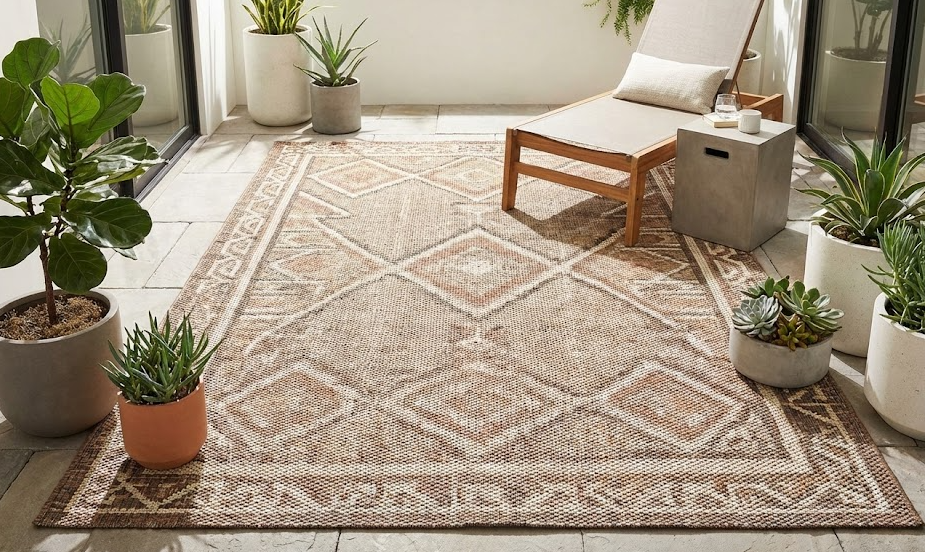
A rug acts like an invisible “frame,” instantly bringing the dining table and chairs or sofa together and clearly defining the dining area or reading corner. It provides a visual anchor for the furniture, transforming the space from an “empty area” into a cozy “living room.”
Ground protection and warmth underfoot:
Whether it’s expensive treated wood or heat-absorbing cement bricks, prolonged exposure to the outdoors will cause them to age. Outdoor Rugs act like a shield, effectively extending the life of the ground.
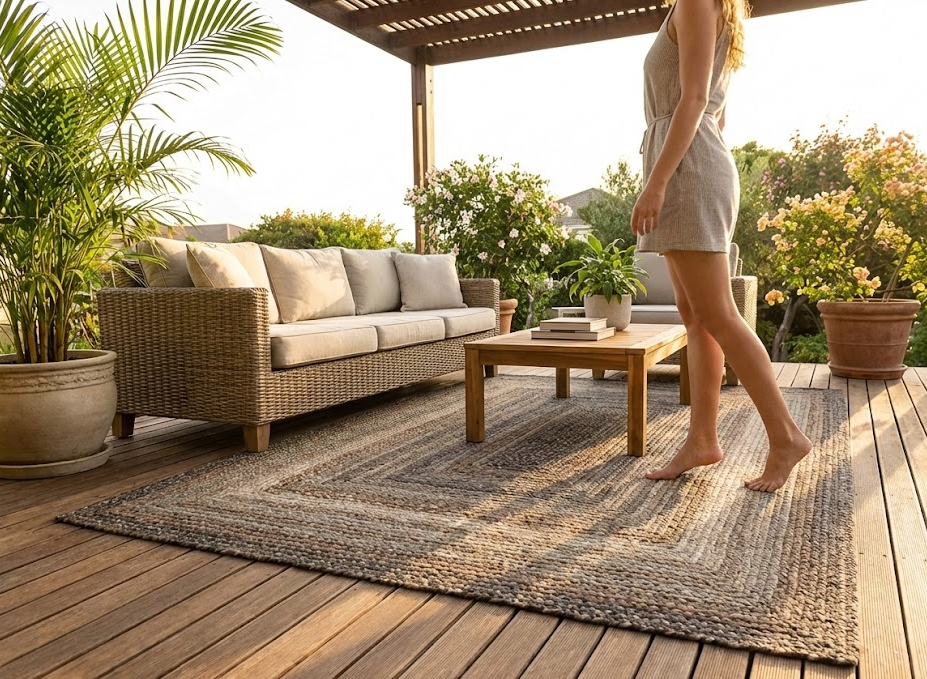
Even more captivating is the tactile experience—in the sweltering summer, they insulate against the scorching heat; on a cool morning, when you walk barefoot to get the newspaper, you feel not cold hardness under your feet, but a soft warmth. These details are what make life truly meaningful.
Noise Reduction and Safety:
An invisible shield protects hard surfaces; dragging a chair is a nightmare. Carpets perfectly absorb this noise and increase friction.
If you have active children or elderly people at home, this anti-slip protection is absolutely essential.
3. A Must-Read for Hardcore Users: Outdoor Rugs Buying Guide and Tips for Avoiding Pitfalls
When choosing outdoor rugs , you can’t just look at the surface colors and patterns. As a “specifications enthusiast,” we need to delve into its “inner workings.”
3.1 The Secrets of Materials: PP, Polyester, Nylon, Which One is Right for You?
Synthetic fibers are the mainstream material for outdoor rugs , but they vary in their properties.
Polypropylene (PP): The “workhorse” of the outdoor rug world
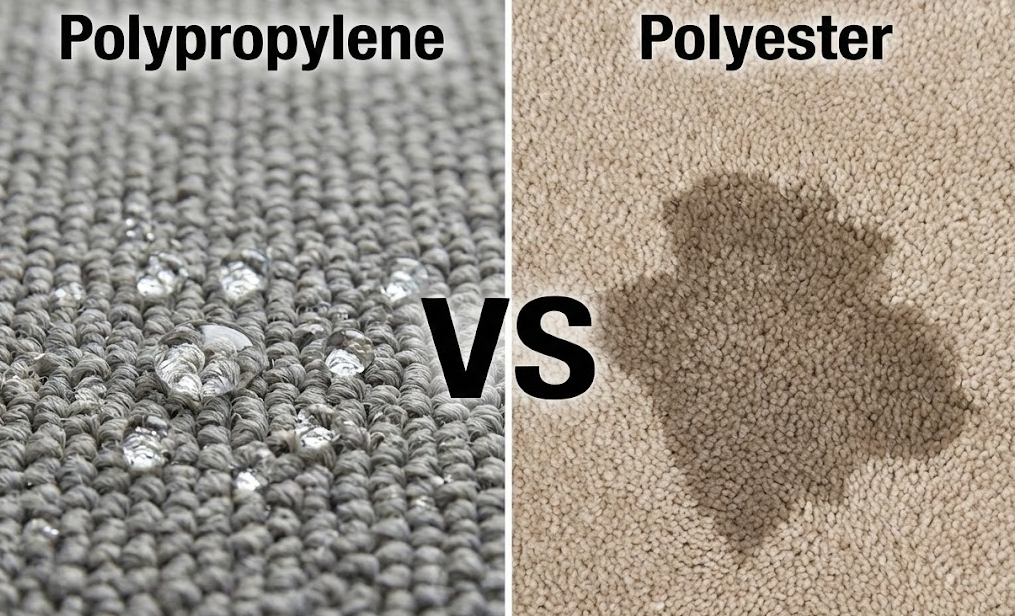
If I had to recommend one, polypropylene would definitely be the top choice. It’s like a workaholic: abrasion-resistant, naturally non-absorbent, and highly UV resistant. Even in heavy rain, it dries quickly, making it difficult for mold to thrive.
Disadvantages: To be honest, PP material does feel rather stiff; don’t expect it to have the smoothness of an indoor wool carpet. Color options are also usually quite restrained.
My own PP outdoor rugs have lasted for two years. When I first put them down, they didn’t feel as “walking on clouds” under my feet, but after two years of exposure to the elements, apart from the edges turning slightly white from sun exposure, they’ve hardly given me any trouble.
I don’t even need to rush to take them in on rainy days; they dry quickly, which is truly worry-free.
Polyester: A favorite among those who value aesthetics.
Polyester’s advantage lies in its color; it can be printed with very vibrant and complex patterns, and its feel is slightly softer than PP. However, its shortcomings are also obvious:
Its UV resistance is slightly weaker, and it is prone to fading after prolonged exposure to sunlight; moreover, it is slightly absorbent, and in humid areas, slow drying means it is prone to mold.
Nylon: Excellent at resisting stains, but slightly expensive
Nylon is extremely durable and has excellent elasticity (it can bounce back after being pressed by heavy objects for a long time), and it is also very stain-resistant. However, it is usually more expensive, and like PP, as it is a chemical fiber, it is prone to fading after prolonged exposure to sunlight.
Natural fibers (such as jute): Just take a look.
Unless you have a fully enclosed sunroom, don’t use natural fibers in outdoor environments. They are delicate and extremely susceptible to water damage; they will mold and rot if exposed to moisture.
If you really like that texture, please make sure it has undergone special moisture-proofing treatment.
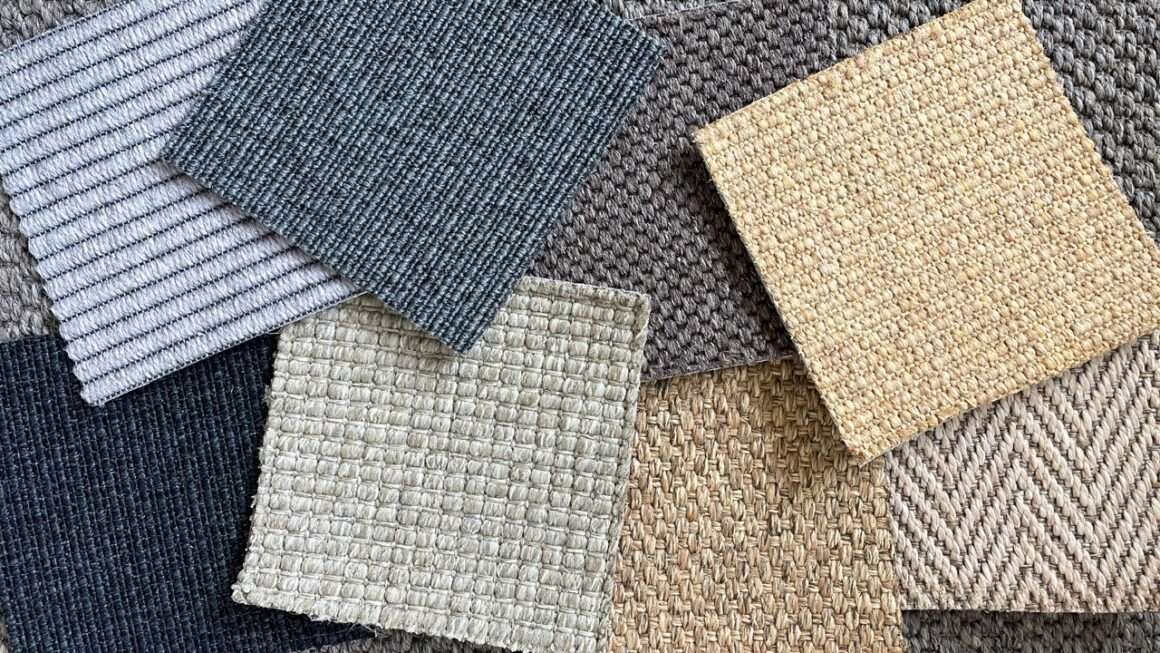
(Want to delve deeper into the comparison of various materials? This review provides more detailed data: Polypropylene vs. Polyester Showdown )
3.2 Weather resistance: Don’t just look at “waterproofing,” look at “drainage.”
Many vendors advertise Outdoor Rugs as “waterproof,” but this is actually a word game.
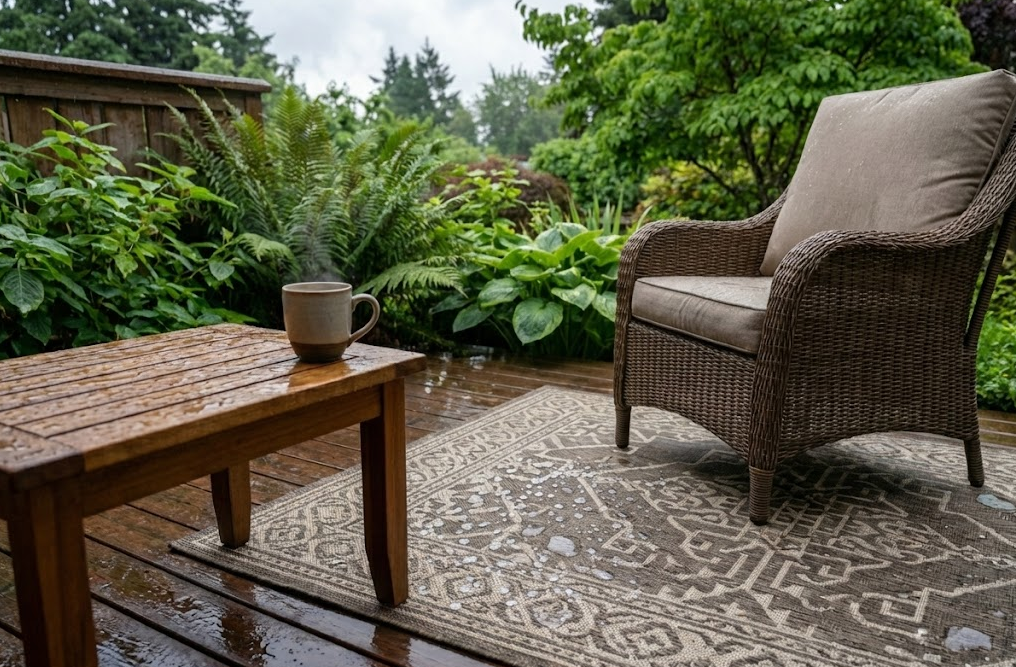
Waterproof vs. Drainage: Most carpets are only “water-resistant,” meaning they’ll still get wet if submerged. For outdoor carpets , drainage and quick-drying properties are far more important than waterproofing. A carpet shouldn’t be a water reservoir; water should drain away and evaporate quickly.
After buying it, pour a cup of water into it to see how quickly it penetrates and how much stain it leaves. If it doesn’t work, return it.
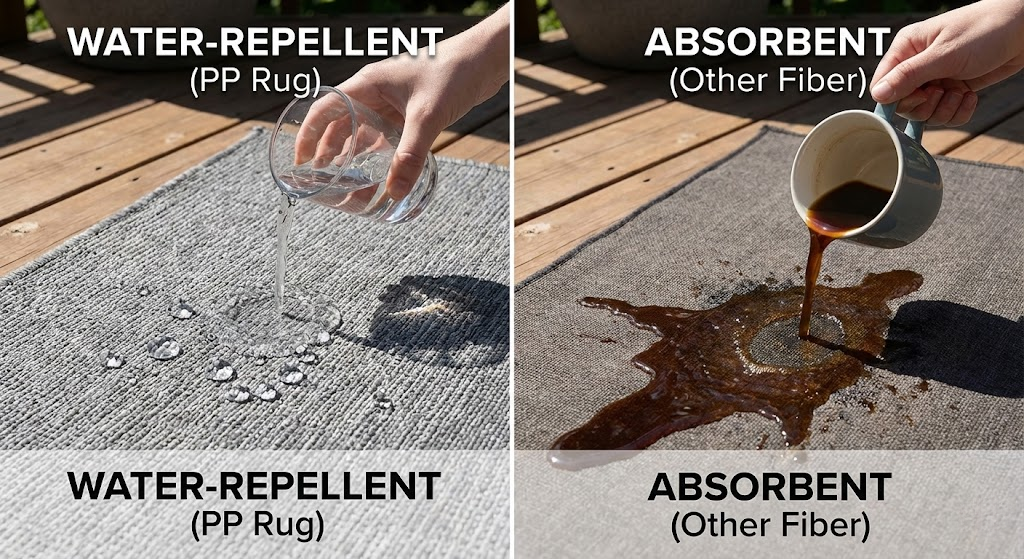
I’ve done this test. Some tightly woven PP rugs will let coffee roll off like dew on a lotus leaf; while some inferior products absorb it instantly like a sponge.
Choose the former, otherwise your rug will smell bad after the rainy season. (For more tips on choosing rugs for rainy days, please refer to The Perfect Outdoor Rugs for Rainy Days )
3.3 Size and Layout: Don’t let your rug become like a “bound-feet old lady”
This is where things are most likely to go wrong, and it’s also the key to distinguishing between “buyer’s show” and “model room”.
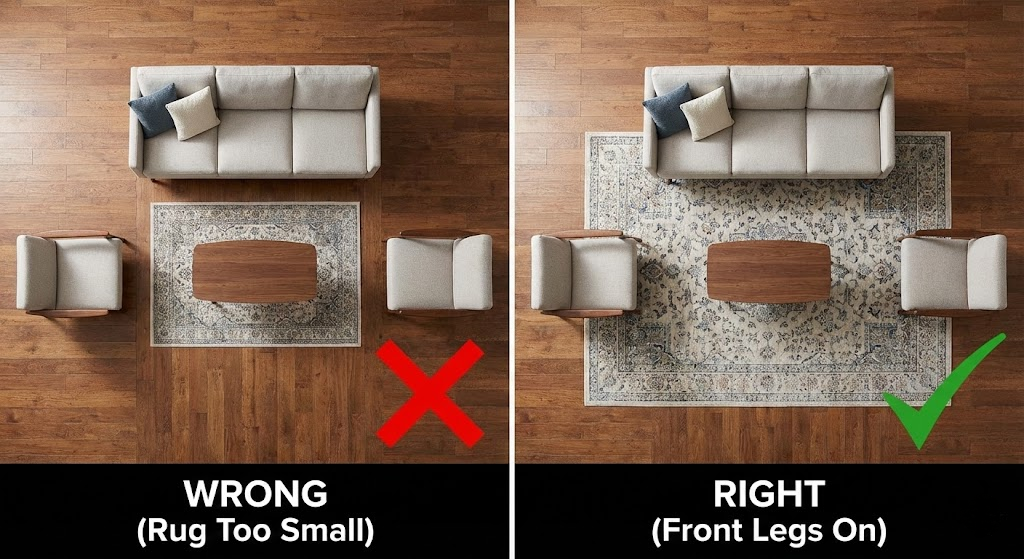
The golden rule: Furniture legs must rest on outdoor rugs. Ideally, all furniture should be fully covered, or at least ensure that the front legs of sofas and chairs are firmly pressed onto the rug.
Size Truth: Most people buy rugs that are too small because they’re worried about the cost.
But let me tell you, a rug that’s too small can make your entire patio look like a cheap showroom.
[Life Details]: Imagine walking barefoot on the terrace on a Sunday. If the carpet is too small, you’ll step onto the cold concrete after just a few steps. Wouldn’t that instantly diminish the feeling of comfort?
Measurement Tip: Don’t rely on your gut feeling. Use a tape measure!
If your dining table is 2 meters long, leave at least 60 centimeters extra on each side of the rug. Why? So that when you pull out your chair and sit down, the back legs of the chair are still within the outdoor rug’s range, instead of awkwardly wobbling at the edge. (Unsure of the dimensions? Here’s a detailed measurement chart: Ultimate Outdoor Rug Sizing Guide )
3.4 Color and Pattern: A sense of sophistication sometimes comes from a “dirty” look.
The outdoors is full of dust, fallen leaves, and mud, so choosing colors requires some thought.
Color selection: Choosing the “unwashed gray” is actually the most sophisticated, because it blends perfectly with dust, so you don’t have to rinse it with a hose every week.
While it may sound counterintuitive, low-saturation grays, beiges, earth tones, or subtly textured mixed colors are truly the “light of the day.” They perfectly conceal everyday dust. Conversely, pure white or pure black is practically a “microscope” outdoors.
UV resistance: Make sure the product is labeled “UV-resistant“. Otherwise, no matter how beautiful the color is, it will turn into an “old rag” after a summer in the sun.
3.5 Craftsmanship and Details: The Devil Is in the Overlock Seams
Overlocking is a key indicator of a carpet’s lifespan.
Tip #3 for avoiding pitfalls: Check the edge stitching first when you buy it. If the edge stitching is too loose, your carpet edges will look like they’ve been scratched by a cat within a summer.
Loose edges will quickly crack and curl, which is not only unsightly but also a tripping hazard.
Product Experience: For example, the washable outdoor woven rug series I’ve been using recently has exceptionally well-finished edges, with a visibly tight, hand-woven feel. After two years of use, the edges are still neat and tidy, without any of that embarrassing “frizzy” look.
Plus, its PP material has excellent water drainage, so it can withstand considerable wear and tear, whether it’s a dark stripe or a light color.
4. Daily maintenance: Even lazy people can easily manage it.
If you choose the right outdoor rugs , they are actually very easy to maintain.
Daily routine:
Shake the leaves occasionally, or sweep them up with a soft-bristled brush. If you see any soil, remove it immediately to prevent it from seeping in.
Deep cleaning (shower):
The best thing about products made of PP material is that you can just spray it with a garden hose! For stubborn stains, just wipe it with mild soapy water, rinse with water, and let it air dry.
Because it doesn’t absorb water, it dries very quickly.
Seasonal Storage:
When not in use during winter, roll it up (don’t fold it) and store it in a dry, well-ventilated place. This will extend its lifespan by several years.
(Need more detailed cleaning steps? Check out this article: How to Clean Outdoor Rugs Fast )
5. Summary: Choose a high-quality rug for your yard.
Ultimately, buying outdoor rugs is a matter of balancing pragmatism and aesthetics.
For hardcore gamers, we don’t care about fancy marketing; what we value is:
whether the material is sturdy enough (PP is the first choice),
whether the drainage is fast enough,
and whether the size is impressive enough (don’t buy one that’s too small!).
A high-quality outdoor rug may have a slightly higher initial investment, but it will save you countless cleaning and replacement hassles. In the long run, it’s definitely a worthwhile investment.
If you’re currently facing a “product selection dilemma” with your outdoor space, perhaps you should try those professional series that combine durability and aesthetics. After all, we’re tinkering with our yards to enjoy life, not to create work for ourselves.
Ready to upgrade your outdoor experience? Click to check out this tried-and-tested “hardcore” rug collection: Hardcore Durable Outdoor Rugs Collection
Frequently Asked Questions About Buying Outdoor Rugs
What is the best material for outdoor rugs?
How do I choose the right color for an outdoor rug?
What is the “Front Legs On” rule for sizing?
How do I check if an outdoor rug drains well?

About Derek Cole
Derek Cole is the Lead Editor and Material Researcher at BuyOutdoorRugs. Based in the rainy Pacific Northwest, Derek treats outdoor styling as a discipline of durability. He manages the site’s rigorous vetting process to separate the durable from the disposable.
My Outdoor Living Journey
I’ll never forget my first real attempt at styling a patio. I bought a stunning jute rug, treating my deck like an indoor living room. And boy, did nature humble me.
One week of heavy rain later, that "perfect" rug had turned into a 50-pound, waterlogged sponge. It smelled like a swamp and trapped moisture against my wood decking.
I learned that day that you can’t just copy-paste indoor rules to the outside. I started digging deeper—moving away from "looks" to understanding solution-dyed fibers and weave density.
What I Do Here
A big part of my role at BuyOutdoorRugs is cutting through the marketing fluff. I analyze "boring" specs like weave patterns so you don’t have to guess.
It’s amazing how two rugs can look identical in a photo, but one will disintegrate in the sun while the other lasts for years.
See you on the patio,
- Derek