The real pros and cons of buying outdoor rugs and essential tips for choosing the right one.
To be honest, I was initially “poisoned” by those beautiful outdoor photos on Pinterest.
Seeing other people’s balconies transformed into cozy and luxurious spaces with carpets makes me incredibly envious. But as a pragmatist who loves tinkering with my yard but hates hassle in practice, I always have to ask myself one more question before placing an order:
Is this thing really worth it?
After spending real money on lessons and testing over the past few years, I’ve found that Outdoor Rugs do have their irreplaceable charm, but at the same time, there are also quite a few pitfalls that will make you want to curse.
Today, I don’t want to talk to you about those empty marketing rhetoric. I just want to clearly explain the real pros and cons, the hard-earned experience of avoiding pitfalls, and the various kinds of “bad tempers”.
If you’re also a skeptic, this article is for you.
1. What lies behind those captivating “outdoor aesthetics”?
Although I hate to admit it, the appeal of outdoor rugs is undeniable. They can instantly transform the ambiance of a space, turning cold concrete into a warm and inviting living area.
1.1 Creating Atmosphere: From “Bare” to “Second Living Room”
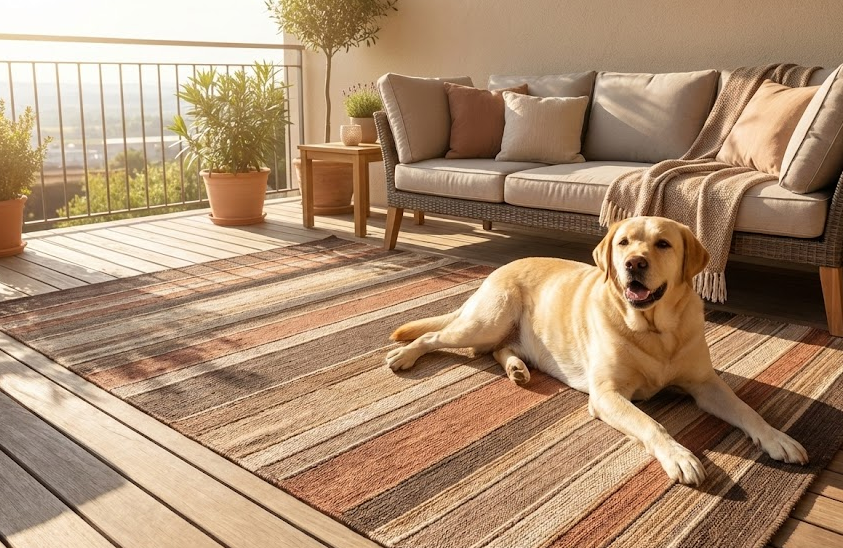
A suitable outdoor rug is like the “soul of soft furnishings” for your terrace. It can instantly transform a spacious, harsh outdoor area into a functional “second living room.” Imagine walking barefoot to get the newspaper on a Sunday morning, stepping on a soft rug instead of cold tiles—the increase in comfort is real.
1.2 Protecting Your Floor: The Ultimate “Filiform Cover-Up”
If your patio floor is old, cracked, or you’re simply worried about your expensive treated wood getting scratched by furniture, outdoor rugs are undoubtedly the best solution. They effectively cover imperfections and act as a buffer layer. For those who don’t want the major undertaking of re-tiling, this is truly a cost-effective “makeover.” (Do you have wood flooring at home? Be sure to read this warning about breathability: Best Outdoor Rugs for Wooden Decks)
1.3 Defining Space: The Invisible Wall
The biggest fear in open-plan spaces is clutter. A rug can act like an invisible wall, cleverly dividing the dining area from the lounge area. Placing a large outdoor rug under the dining table visually tells guests, “Hey, this is the dining area, don’t drag your chairs around.”
2. Don’t be fooled by the advertising: The real “pain points” and “pitfalls” of Outdoor Rugs
It’s wonderful, but as someone who’s been there, I have to give you a reality check. Outdoor Rugs are definitely not to be underestimated; they have quite a few annoying little quirks that will give you a headache.
2.1 Maintenance hassles: Is it really as simple as just “rinsing”?
rugs,Merchants always casually say, “Outdoor Rugs, you can just rinse them with a hose when they get dirty.” It sounds great, but in practice, you’ll find that this is the biggest lie.
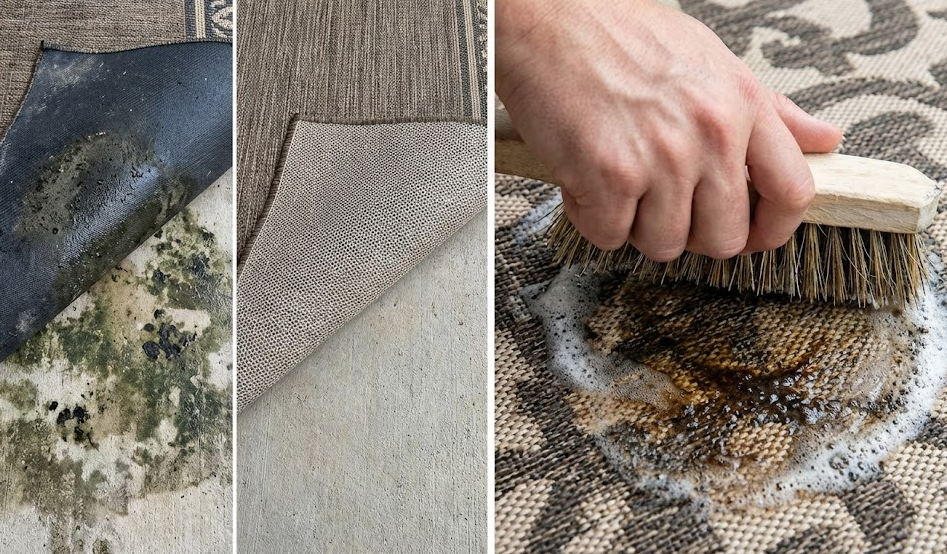
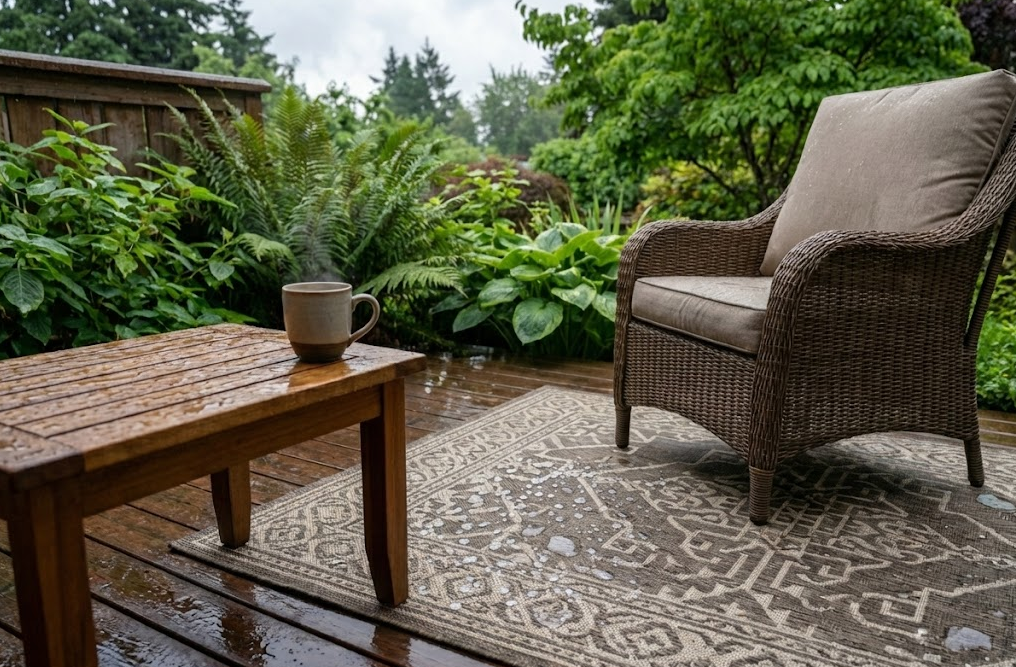
Moisture and mold (the invisible killer): Especially in the south or rainy areas, if carpets are laid on non-breathable surfaces and left untouched for several days during the rainy season, a glimpse reveals that the back and the floor are often covered in green mold. The damp, musty smell can be truly devastating. (Don’t want mushrooms? This mold prevention guide might save your life: The Perfect Outdoor Rugs for Rainy Days)
The Cleaning Dilemma: The outdoors isn’t just about rain; it also brings barbecue grease, mud, and bird droppings. While most synthetic materials claim to be easy to clean, stubborn grease seeps into the fibers, and rinsing with water alone won’t do the trick. You have to kneel on the ground and scrub with a brush, which is definitely not the life of a “lazy person.”
2.2 The Test of Lifespan: Sunlight is a Butcher’s Knife
Outdoor rugs are destined to be exposed to wind and sun, and their lifespan is far shorter than that of indoor carpets.
Fading (slow suicide): Even products that claim to be “UV resistant” cannot escape their fate under prolonged direct sunlight. I once used a blue and white striped rug, and after a year and a half, the blue turned into a bleak gray-blue, and the white turned yellowish. The whole rug looked like it had “jaundice.”
Wear and pilling: In high-frequency friction areas like under the dining table, the fibers will wear out and pill more quickly.
A golden rule for avoiding pitfalls: Check the edge stitching first when you buy it. If the edge stitching is too loose, your carpet will look like it’s been scratched by a cat within a summer. This is a lesson I learned the hard way. Poorly made edge stitching will fall apart after being exposed to wind and rain. Checking this detail immediately upon receiving the carpet is more important than looking at the pattern.
2.3 Common Purchase Misconceptions: Those “False Needs” That Lead You astray
Myth 1: Pursuing ultimate softness
Outdoors, durability and softness are often inversely proportional. If you want a silky feel, it’s best to stay indoors. Those outdoor rugs that feel particularly soft often indicate low fiber density or delicate materials.
Myth 2: Buying a smaller size saves money
Most people buy rugs that are too small because they’re worried about the cost. But let me tell you, a rug that’s too small will make your entire patio look like a cheap showroom. This is a fatal aesthetic mistake. (Don’t buy blindly; first, check out this size quick reference chart, the Ultimate Outdoor Rug Sizing Guide.)
Myth 3: Blindly trusting waterproofing
Drainage test: Pour a cup of liquid into the container after you buy it and observe the rate of penetration and the amount of stains left. If it doesn’t perform well, return it. Seeing is believing.
3. Material Unveiled: Durable or Delicate? The Data Tells All
outdoor rugsChoosing Outdoor Rugs is essentially choosing the material.
3.1 Synthetic Fibers: The “Main Force” of Outdoor Rugs
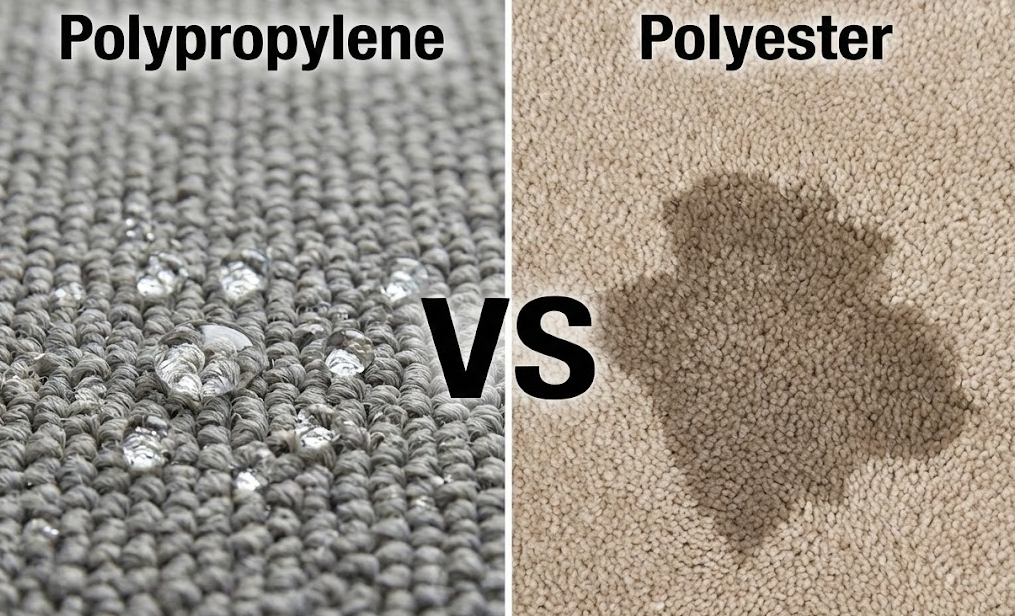
polypropyleneIf I had to recommend only one, it would definitely be Polypropylene (PP).
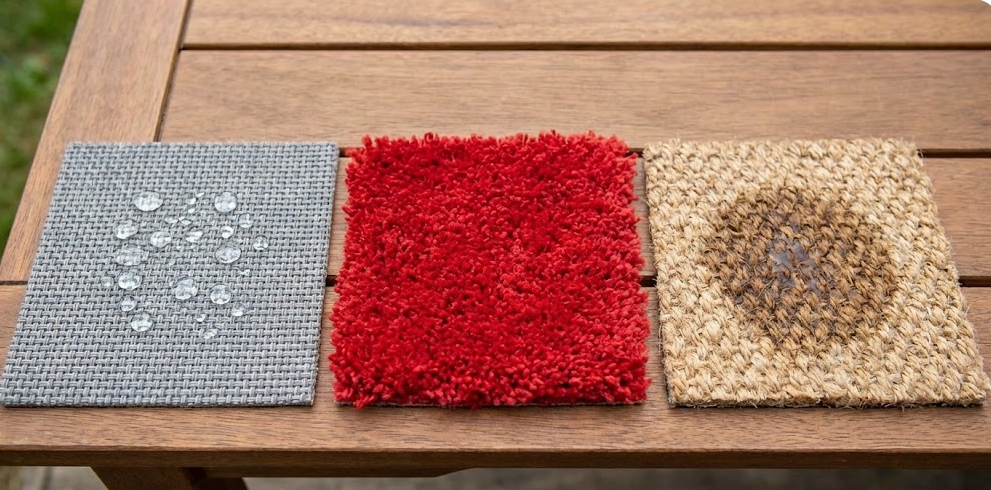
Why choose it? It’s naturally non-absorbent (extremely hydrophobic), so rainwater droplets will bead up and roll off. This means it’s extremely difficult for it to mold and dries very quickly.
My test: My PP rug was left on a semi-open terrace for two years, experiencing the rainy season and intense sunlight. Apart from becoming slightly worn, its structure remained sturdy.
3.2 Polyester: Attractive colors, but has a “troublesome” side
Polyester dyes well, producing vibrant colors that don’t fade easily. However, its abrasion resistance is average, and it’s oleophilic—once stained with barbecue grease, it’s extremely difficult to wash off.
polyester? (Want to see a detailed comparison between PP and Polyester? Material Showdown: Which Rug Lasts Longer?)
3.3 Natural Fibers: Looks great, but they’re not easy to care for
Jute/sisalJute/Sisal has a natural bohemian vibe, but they’re extremely sensitive to water. Once damp, they’ll mold and rot in no time. Unless you’re storing them in a fully enclosed sunroom, don’t buy them.
4. Shopping Guide to Avoiding Pitfalls: A “Pragmatic Checklist” for Skeptics
Based on the above analysis, if you decide to buy outdoor rugs, please keep this list handy:
Material Selection:
- Choose polypropylene (PP) for rainy and humid areas.
- Choose polyester or PP with UV protection for areas exposed to strong sunlight.
- Only consider natural fibers in dry, sheltered areas.
Size rule: It’s better to be one size too big than one size too small. Furniture must “press down” the carpet.
Clever use of color:
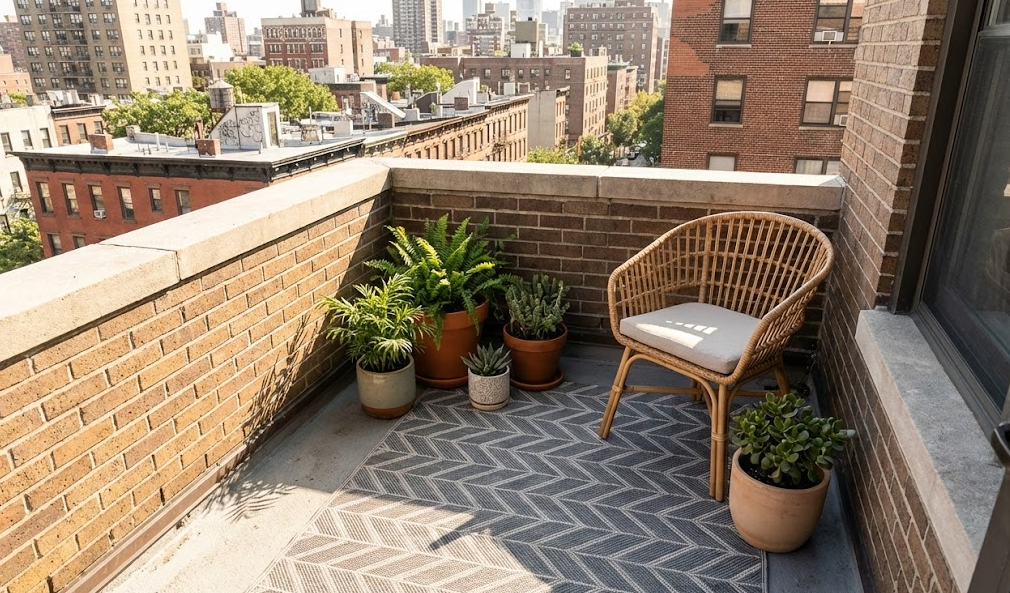
A golden rule to avoid fashion faux pas: Embrace “dirty gray.” Choosing that “unwashed gray” is actually the most sophisticated, because it perfectly blends in with dust, saving you from having to rinse it with a hose every week. Low-saturation earth tones and mottled textures are a lifesaver for “lazy” people.
A must-have backing: We strongly recommend using an outdoor-grade anti-slip mat. Not only does it prevent slipping, but it also elevates the carpet, promoting air circulation underneath and preventing mold growth.
5. Routine care and extending lifespan: My “lazy person’s” maintenance tips
As someone who dislikes hassle, I’ve summarized a few low-cost maintenance methods:
Regularly perform “violent” cleaning: Sweep with a high-pressure water gun once a week to remove dust.
Emergency treatment for oil stains: If barbecue oil drips onto your skin, you must immediately blot it dry with absorbent paper, then scrub with detergent. Each hour later, the difficulty doubles.
Give your rugs a break: During winter or extreme rainy seasons, roll up your outdoor rugs and bring them indoors. This simple action can double their lifespan.
In conclusion: Is it worth buying?
Outdoor rugs are like “cosmetics” for outdoor spaces. They do require maintenance and age, but the aesthetic improvements and comfort they bring are incomparable to bare concrete surfaces.
If you can accept its “both beautiful and appealing” nature, and choose the right material (I recommend polypropylene again), then it is definitely worth investing in.
Looking for a collection of durable rugs that even skeptics can’t find fault with? Shop Rugs Approved by Skeptics
Frequently Asked Questions About Outdoor Rugs
Are outdoor rugs really waterproof?
Will an outdoor rug damage my wood deck?
How long do outdoor rugs typically last?
Can I leave my outdoor rug out in the rain?

About Derek Cole
Derek Cole is the Lead Editor and Material Researcher at BuyOutdoorRugs. Based in the rainy Pacific Northwest, Derek treats outdoor styling as a discipline of durability. He manages the site’s rigorous vetting process to separate the durable from the disposable.
My Outdoor Living Journey
I’ll never forget my first real attempt at styling a patio. I bought a stunning jute rug, treating my deck like an indoor living room. And boy, did nature humble me.
One week of heavy rain later, that "perfect" rug had turned into a 50-pound, waterlogged sponge. It smelled like a swamp and trapped moisture against my wood decking.
I learned that day that you can’t just copy-paste indoor rules to the outside. I started digging deeper—moving away from "looks" to understanding solution-dyed fibers and weave density.
What I Do Here
A big part of my role at BuyOutdoorRugs is cutting through the marketing fluff. I analyze "boring" specs like weave patterns so you don’t have to guess.
It’s amazing how two rugs can look identical in a photo, but one will disintegrate in the sun while the other lasts for years.
See you on the patio,
- Derek