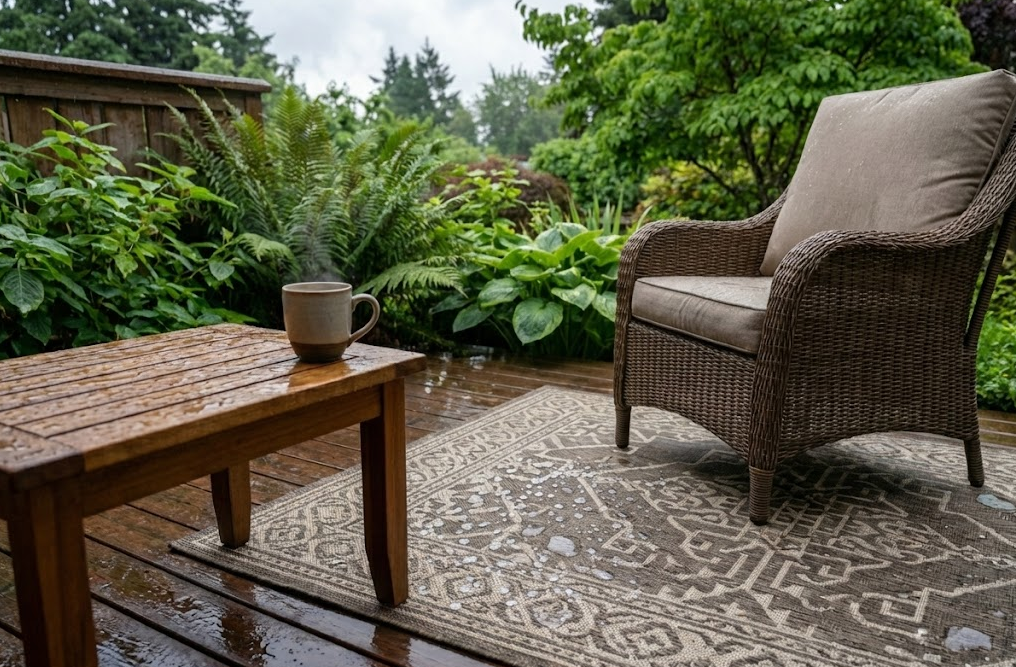
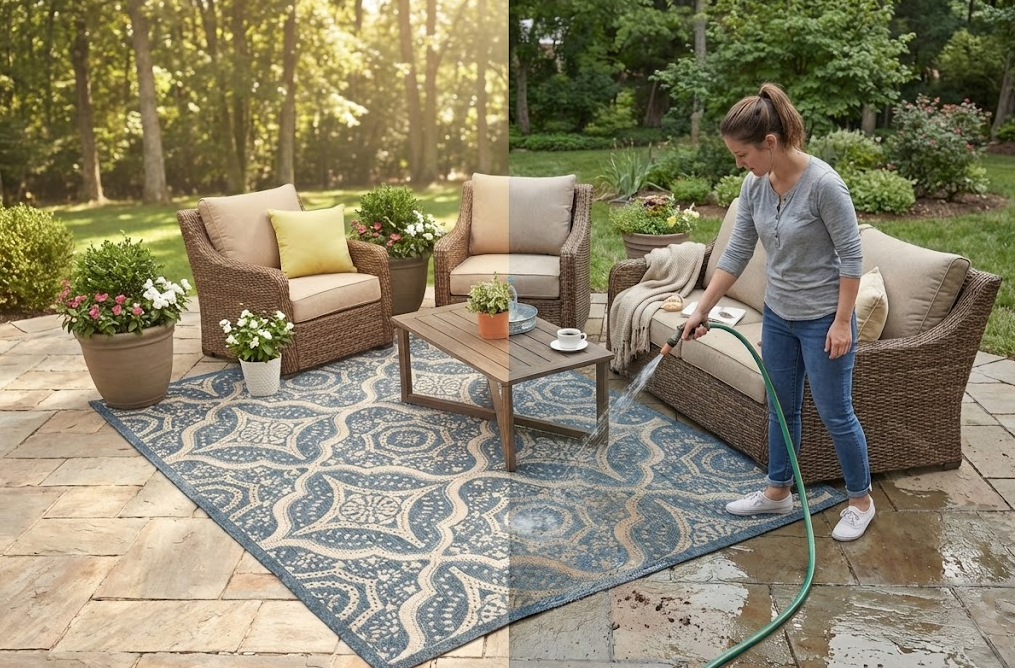
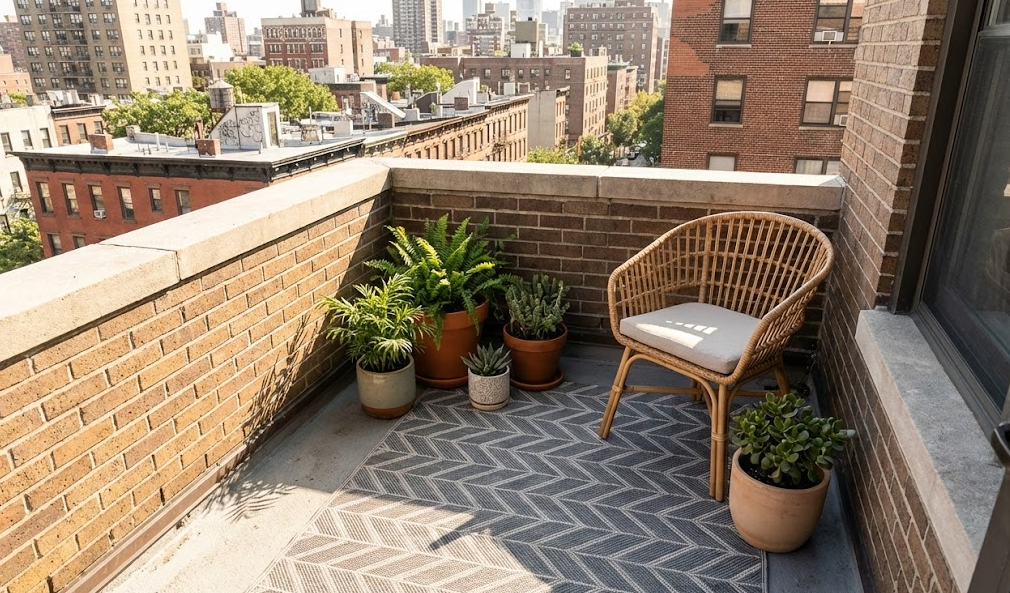
Honestly, nothing can instantly elevate the look of a yard more than a well-chosen outdoor rug.
Imagine this: on a sunny weekend, the terrace is no longer a bare concrete floor but has been transformed into a cozy “second living room.” You’re nestled on the sofa, sipping an iced coffee, while your dog rolls around and sunbathes beside you… This scene can truly soothe the “work itch” of the week.
But reality? Reality often gives you a resounding slap in the face.
Especially if you have one (or two) energetic dogs. Muddy paw prints, unexplained drool stains, rolling around on the grass, and even the more frustrating “vomit surprise“… these little troubles can ruin even the most expensive outdoor rugs in an instant.
After all, who wants to spend two hours kneeling on the floor scrubbing the carpet on a beautiful weekend? I certainly don’t.
As someone who “loves to tinker with my yard but is extremely averse to hassle,” I won’t talk about any vague design aesthetics today.
Let’s just have a heart-to-heart talk about how to choose a truly durable, easy-to-maintain, and dog-proof patio rug.
Avoid paying too much “stupidity tax” and save your time to enjoy life.
1. Material Determines the Outcome: The Carpet’s “Constitution” Makes Everything Possible
When choosing outdoor rugs, the material is always the first hurdle. It directly determines how far the rug can last you and how many tears you’ll shed while cleaning it.
Polypropylene (Olefin): My go-to choice
If you ask me which material is the only solution for dog-owning families, my answer is usually only one: polypropylene.
This material is simply tailor-made for outdoor living and pets.
Why can it “hold” against dogs? It’s simple: this synthetic fiber is inherently hydrophobic. It hardly absorbs water, meaning that stains (even urine) have difficulty penetrating deep into the fibers and mostly just float on the surface.
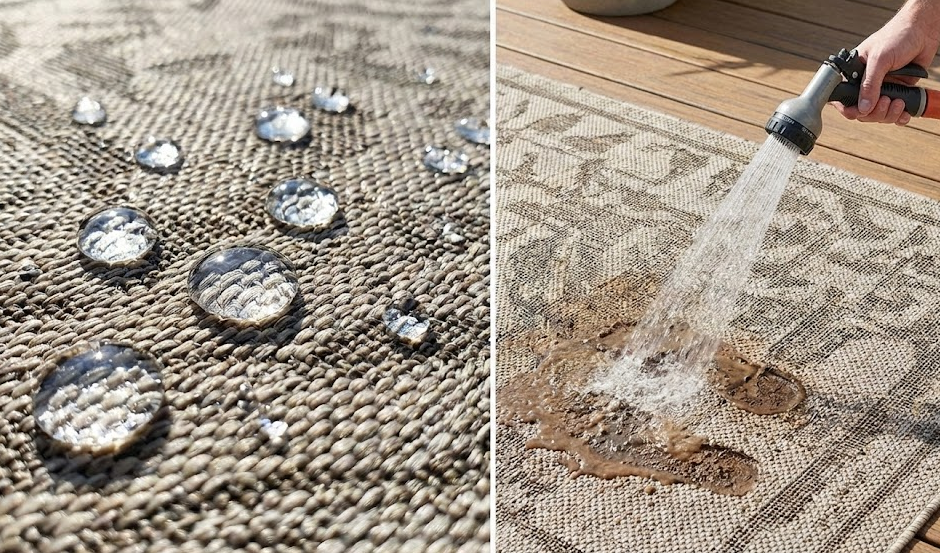
A polypropylene rug in my backyard has served me for two years. It’s withstood the endless rain of the Pacific Northwest and the ravages of my two Golden Retrievers.
And the result? The color hasn’t faded much. The dogs occasionally leave muddy paw prints, but I just use a garden hose to rinse them off, or I gently rub them with a stiff brush, and the stains disappear.
The only “sacrifice”: Don’t be fooled by the “feel.” Outdoors, durability and softness are often inversely proportional. Polypropylene does feel a bit like plastic and isn’t as skin-friendly. But believe me, for the satisfaction of “rinsing clean in no time,” this sacrifice is absolutely worthwhile.
(Want to know why I highly recommend PP material? Check out this in-depth review: Polypropylene vs. Polyester Showdown.
Polyester (PET): Attractive, but with a “barrier” to entry.
This material (especially that made from recycled plastic bottles) is very popular lately. It looks great, has vibrant colors, and feels softer than PP when you walk barefoot on it.
But there’s a hidden pitfall: it’s slightly more absorbent than polypropylene. If your patio doesn’t drain well, or if you live in a damp area like I do, it risks mold.
For dog-owning families, dampness means bacteria and that lingering “wet dog smell.”
In the past, when I bought PET rugs, the first thing I did after receiving them was to pour a cup of black coffee on them. If the coffee absorbed too quickly, I would return them without hesitation.
Nylon and natural fibers: “No-go” for dog-owning families
Nylon: It’s durable, but too expensive. Also, it fades under strong UV light. Unless you plan to replace the carpet every two years, it’s not cost-effective.
Natural Fiber (Jute/Sisal): Jute and sisal do have that sophisticated “wabi-sabi” feel. However, please stop immediately! Outdoors, they are like absorbent sponges. Once they get wet with dog urine or rainwater, they simply won’t dry and will eventually mold, smell, and have to be thrown away.
(Warning: Many beginners use indoor rugs and end up with huge losses. Before ordering, we recommend reading this article: Outdoor Rugs vs Indoor Rugs: 5 Costly Mistakes.
2. Weaving technique: This is the “skeleton” of the carpet.
Choosing the right material is important, but you also need to consider the structure. Because dog paws are the biggest enemy of carpets.
Flatweave: The top choice for pet owners. This type of rug has no pile and a tight weave. The advantages are obvious:
- Dog hair, dander, and dust have nowhere to hide, and they can be easily vacuumed up.
- More importantly, there are no loops, so there’s nowhere for your dog’s paws to scratch.
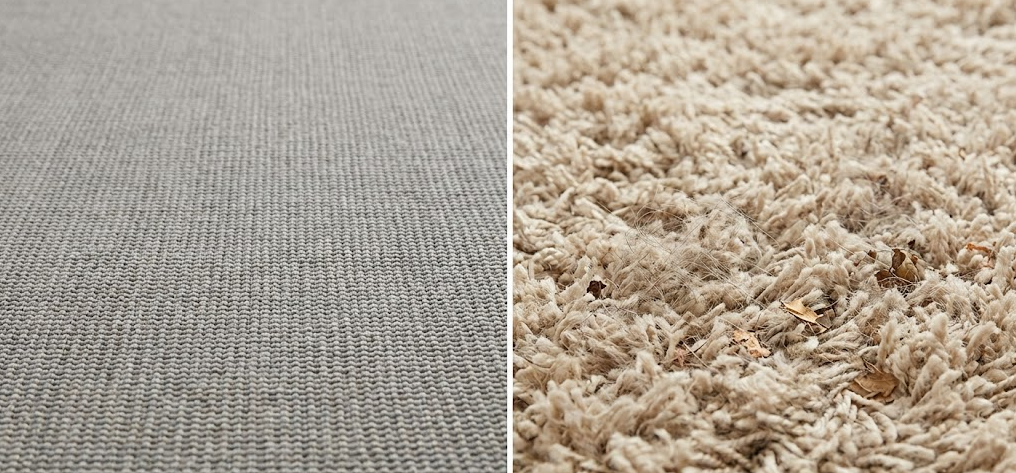
High Pile (Long Pile) Warning: It’s a disaster. Take my advice, high-pile rugs are a nightmare outdoors. Not only will they trap every single shed dog hair, but they’ll also act like a vacuum cleaner, catching dry leaves, pebbles, and food scraps.
And once they get a wet stain (like dog vomit), the cleaning difficulty will make you question your existence.
For outdoor rugs, the flatter and shorter, the better.
3. Shopping “Hidden Rules”: Details Merchants Won’t Tell You
Besides materials and craftsmanship, several other details directly determine your user experience.
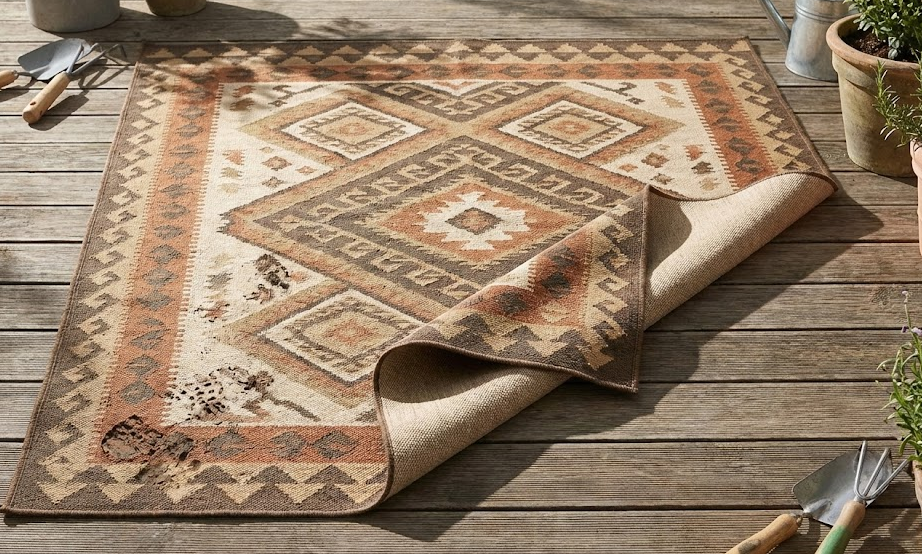
Backing and Safety: Avoid rubber-backed rugs. If your energetic dog is running around and the rug becomes slippery, it’ll be a “flying trap.”
But never buy outdoor rugs with built-in rubber backing!
Under high temperatures and direct sunlight, the rubber will melt and stick to your floor, impossible to remove.
Especially if you have an expensive wood deck, the rubber backing will prevent the wood from breathing, leading to rot.
Decks.)(Wooden floor users should definitely look for safe alternatives; you can refer to this article: Best Outdoor Rugs for Wooden Decks)
If you’re worried about your rugs shifting, here’s a safer way to prevent slipping: How to Keep Outdoor Rugs from Slipping.
Gray.” Color: Embrace the “Unwashable Gray” Practical experience tells me that choosing a “gray that looks like it hasn’t been washed properly” or earth tones is actually the most sophisticated.
These low-saturation colors perfectly “eat up” dust, dirt, and even small stains, so you don’t have to wash it with a hose every week. Combined with intricate geometric patterns, the rug can maintain a “looking clean” appearance for a long time.
4. Routine maintenance: Even good carpets require frequent care.
outdoor rugs,Even if you choose the right Outdoor Rugs, simple maintenance can extend their lifespan by several years:
- —it’sSimple rinse: To deal with everyday dust, simply rinse it with a garden hose – it’s the most refreshing and effective method.
- Spot cleaning: Accidental stains should be treated promptly with a mild detergent (mild soap) and a soft brush, making sure the stain doesn’t get into the fibers.
- Regular airing: After the rainy season, find a well-ventilated place to stand the carpet upright and let it dry. This is the key to preventing mold.
rugs.(Afraid of damaging them during washing? Here’s a hands-on cleaning guide to quickly and easily clean your outdoor rugs.)
Conclusion: Make dog ownership a more relaxed experience
burden butAn outdoor rug that understands you shouldn’t be a cleaning burden, but rather a helpful companion for your outdoor life.
morning andIt should give you a sense of security when you go barefoot to get the newspaper on a Sunday morning, and allow you to leisurely enjoy afternoon tea after playing with your dog.
If you’re planning to upgrade your outdoor space, consider these practical shopping tips. Hopefully, they’ll save you unnecessary hassle and make your terrace life more free and worry-free.
Ready to get started? Check out my handpicked dog-friendly list—all truly durable and reliable items that I’ve personally tested:
Top-Rated Dog-Friendly Outdoor Rugs Collection
Frequently Asked Questions About Dog-Friendly Outdoor Rugs
What is the best material for outdoor rugs if I have dogs?
Are jute or sisal rugs good for homes with pets?
How do I clean dog urine or vomit off an outdoor rug?
Why should I avoid outdoor rugs with rubber backing?

About Derek Cole
Derek Cole is the Lead Editor and Material Researcher at BuyOutdoorRugs. Based in the rainy Pacific Northwest, Derek treats outdoor styling as a discipline of durability. He manages the site’s rigorous vetting process to separate the durable from the disposable.
My Outdoor Living Journey
I’ll never forget my first real attempt at styling a patio. I bought a stunning jute rug, treating my deck like an indoor living room. And boy, did nature humble me.
One week of heavy rain later, that "perfect" rug had turned into a 50-pound, waterlogged sponge. It smelled like a swamp and trapped moisture against my wood decking.
I learned that day that you can’t just copy-paste indoor rules to the outside. I started digging deeper—moving away from "looks" to understanding solution-dyed fibers and weave density.
What I Do Here
A big part of my role at BuyOutdoorRugs is cutting through the marketing fluff. I analyze "boring" specs like weave patterns so you don’t have to guess.
It’s amazing how two rugs can look identical in a photo, but one will disintegrate in the sun while the other lasts for years.
See you on the patio,
- Derek